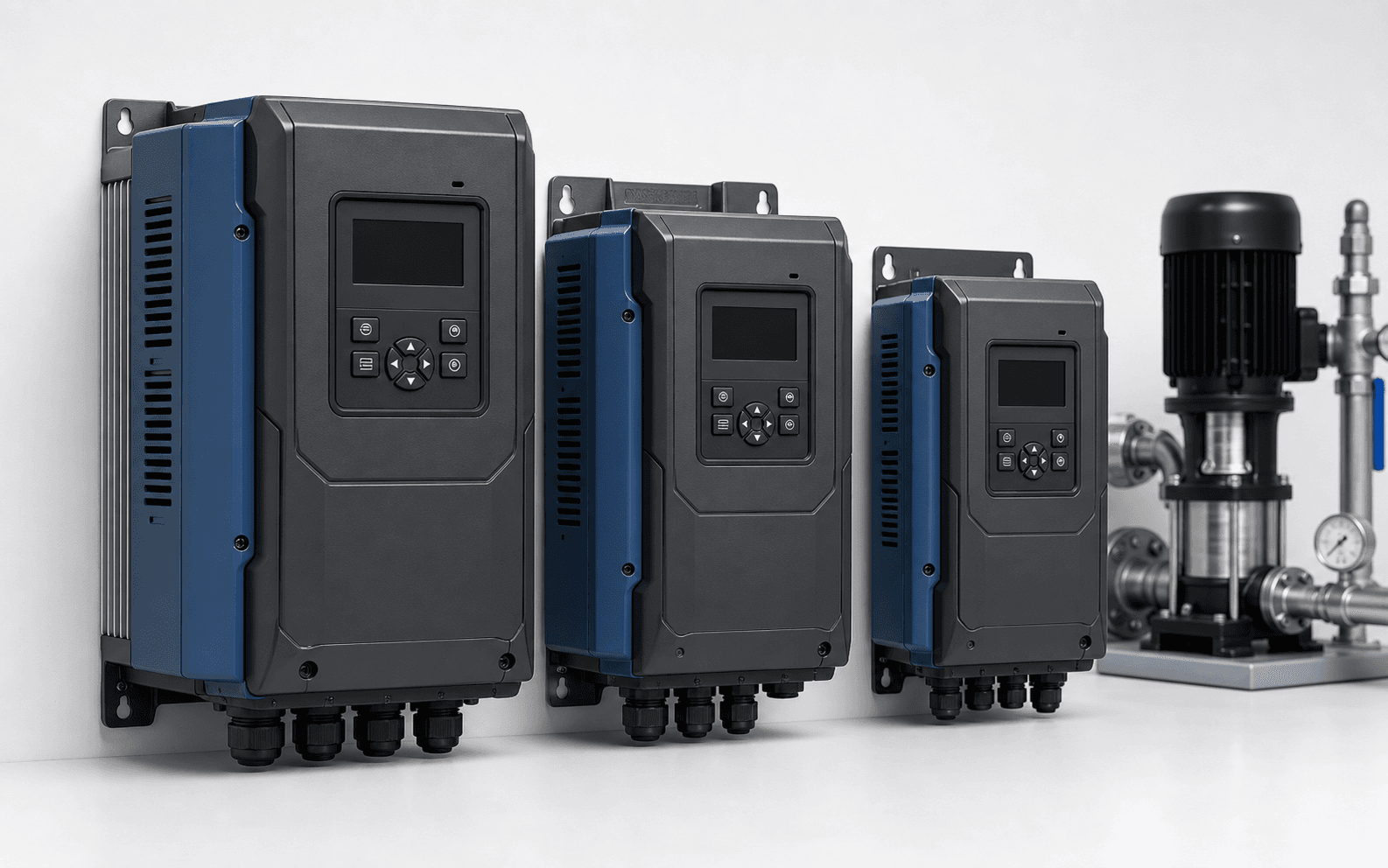
Inverter Solutions for Water Treatment
Inverters, also commonly known as Variable Frequency Drives (VFDs) or frequency converters, are critical components for optimizing performance and efficiency in modern water treatment systems. These devices precisely control the speed of AC motors by adjusting the frequency and voltage of the electrical power supply. This capability is essential for managing pump and fan operations, ensuring process stability, and achieving significant energy savings across various water and wastewater applications.
Core Benefits in Water Treatment
Our inverter solutions are engineered to enhance the efficiency, reliability, and control of your water treatment operations:
- Precise Motor Speed Control: Inverters enable stepless adjustment of motor speed, allowing pumps and fans to operate exactly at the required flow or pressure. This eliminates the need for mechanical throttling or bypass valves, reducing wear and tear on equipment.
- Pressure and Flow Stability: By continuously matching pump output to real-time demand, inverters maintain stable system pressure and consistent flow rates. This is crucial for processes such as filtration, chemical dosing, and distribution networks, preventing pressure surges and ensuring reliable process conditions.
- Energy-Saving Operation: In applications with fluctuating demand, inverters allow motors to run at partial loads with high efficiency. This leads to substantial reductions in energy consumption and operational costs, as the power consumption of centrifugal pumps and fans is proportional to the cube of their speed.
- System Integration: Our inverter solutions are designed for seamless integration with existing pump systems, SCADA, and broader process control architectures. They provide advanced control features, diagnostic capabilities, and communication protocols to optimize overall plant performance and enable remote monitoring.
- Reduced Mechanical Stress: The soft starting and stopping capabilities of inverters minimize mechanical shock on motors, pumps, and piping. This extends equipment lifespan, reduces maintenance requirements, and prevents costly downtime.
Selecting the Right Inverter
Choosing the appropriate inverter involves a careful evaluation of several technical factors to ensure optimal performance and system compatibility:
- Motor Compatibility: Verify that the inverter's output characteristics, including power rating, voltage, and current, precisely match the specifications of the connected motor.
- Control Mode Requirements: Assess the application's specific control needs, whether it requires basic V/f control, sensorless vector control, or high-performance closed-loop vector control.
- Harmonics and EMC: Consider the potential for harmonic distortion and ensure compliance with electromagnetic compatibility (EMC) requirements, particularly in sensitive industrial environments. Solutions may include integrated or external filtering.
- Enclosure and Environmental Protection: Select an inverter with an appropriate IP rating and environmental protection suitable for the installation location, accounting for factors such as dust, moisture, and ambient temperature.
- Communication Protocols: Ensure compatibility with your plant's control network (e.g., Modbus, Profibus, Ethernet/IP) for effective monitoring, control, and data exchange.
Final verification of all electrical data and compatibility must always follow the specific OEM documentation for the chosen inverter and motor combination. Our team is available to assist in selecting the ideal inverter solution for your specific water treatment challenges.