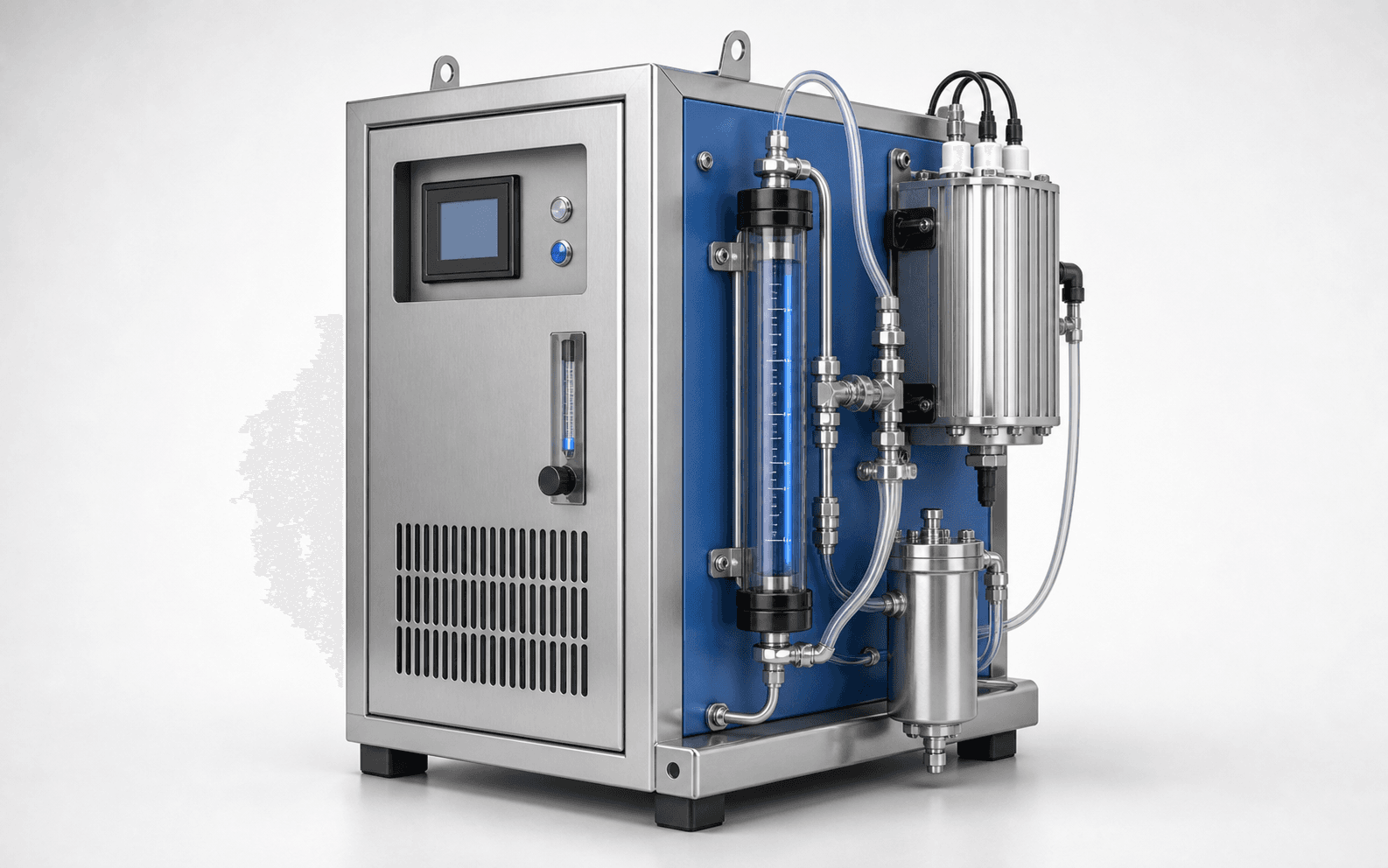
Ozone Generation Systems for Water Treatment
Ozone (O₃) is a powerful oxidant and disinfectant widely utilized in water and wastewater treatment. As an unstable molecule, ozone must be generated on-site, offering a highly effective and chemical-free solution for a broad spectrum of contaminants. These systems are critical for achieving stringent water quality standards across various industrial and municipal applications.
Core Principles of Ozone Generation
Ozone generators typically produce ozone through a corona discharge method, where oxygen gas passes through an electrical field, splitting O₂ molecules into atomic oxygen, which then recombines with other O₂ molecules to form O₃. The efficiency and concentration of ozone produced are significantly influenced by the purity of the feed gas and the cooling mechanism.
Feed Gas Options
- Air-Fed Systems: These systems utilize ambient air as the feed gas, which must be meticulously prepared by drying and filtering to remove moisture and particulates. This preparation is crucial to prevent nitric acid formation and extend the lifespan of the generator's dielectric components. Air-fed generators are suitable for applications requiring ozone production ranging from 4 g/h to 9 kg/h.
- Oxygen-Fed Systems: Employing concentrated oxygen as the feed gas results in higher ozone concentrations and improved energy efficiency. Oxygen-fed systems are preferred for larger-scale applications or where higher ozone dosages are required. These systems can achieve ozone production capacities from 5 g/h to 15 kg/h.
Cooling Requirements
Effective cooling is essential for efficient ozone generation, as the process generates significant heat.
- Air-fed systems can utilize either air or water as a cooling fluid.
- Oxygen-fed systems typically require water cooling for optimal performance and to manage the higher heat loads associated with increased ozone production.
Production Capacities and Efficiency
Modern ozone generation systems are designed for high efficiency. Energy consumption for ozone production can be less than 7 kW per kilo of ozone produced, depending on the system configuration and feed gas purity.
Ozone Mass Transfer and Contact Systems
Once generated, ozone gas must be efficiently dissolved into the water stream. This mass transfer is achieved through various methods, including venturi injectors, fine bubble diffusers, or static mixers within dedicated contactor tanks. Adequate contact time between the ozonated water and the contaminants is paramount for effective disinfection and oxidation reactions. System design ensures optimal mixing and sufficient retention time to meet specific treatment objectives.
Residual Ozone Management and Safety
After the treatment process, any residual ozone in the treated water or off-gas must be safely managed before discharge. Residual ozone in water can be destroyed using methods such as ultraviolet (UV) irradiation or granular activated carbon (GAC) filters. Off-gas containing ozone is typically passed through a thermal or catalytic ozone destruct unit. Safety protocols, including continuous ozone monitoring, proper ventilation, and system interlocks, are integral to the design and operation of all ozone treatment facilities.
Typical Applications in Water and Wastewater
Ozone generation systems are versatile and applied across numerous sectors for their powerful oxidative and disinfectant properties:
- Drinking Water Treatment: Disinfection, taste and odor control, color removal, oxidation of iron, manganese, and organic micropollutants.
- Wastewater Treatment: Disinfection, reduction of chemical oxygen demand (COD) and biochemical oxygen demand (BOD), removal of emerging contaminants, and tertiary treatment for water reuse.
- Industrial Process Water: Sterilization of process water for pharmaceutical manufacturing, cooling tower water treatment, and food and beverage processing.
- Aquaculture: Disinfection and water quality improvement in fish pond water treatment systems, such as those used in recreational parks.
Specific performance characteristics and certified data for individual ozone generation systems are detailed in the respective OEM datasheets.