Solutions · Application Scenarios
High-recovery RO systems: pushing past the 75–90% permeate ceiling
Recovery is staged with pretreatment discipline, antiscalant validation, and an explicit concentrate disposition path. Higher recovery with defensible mass…
Use this guide within its scope
This page supports technical research and option comparison and is marked 2026. Illustrative values are not a quotation, completed process design, certification conclusion, or performance guarantee. Check current regulations, feed data, tests, and OEM records.
Problem
Owners want more permeate until silica, sulfate, or LSI makes recovery a chemistry problem—not a pump problem.
Technology
Recovery is staged with pretreatment discipline, antiscalant validation, and an explicit concentrate disposition path.
Results
Higher recovery with defensible mass balance, fewer unplanned cleans, and a documented reject stream plan.
Engineering decision card
Use when
Owners want more permeate until silica, sulfate, or LSI makes recovery a chemistry problem—not a pump problem.
Evaluate first
Recovery is staged with pretreatment discipline, antiscalant validation, and an explicit concentrate disposition path.
Inputs still required
Feed source and variability, capacity, target quality, operating hours, discharge or reuse boundary, available space, and utilities.
Comparison output
Higher recovery with defensible mass balance, fewer unplanned cleans, and a documented reject stream plan. The final decision still needs feed data, mass balance, and any necessary testing.
1. Process context & when this scenario is the right entry point
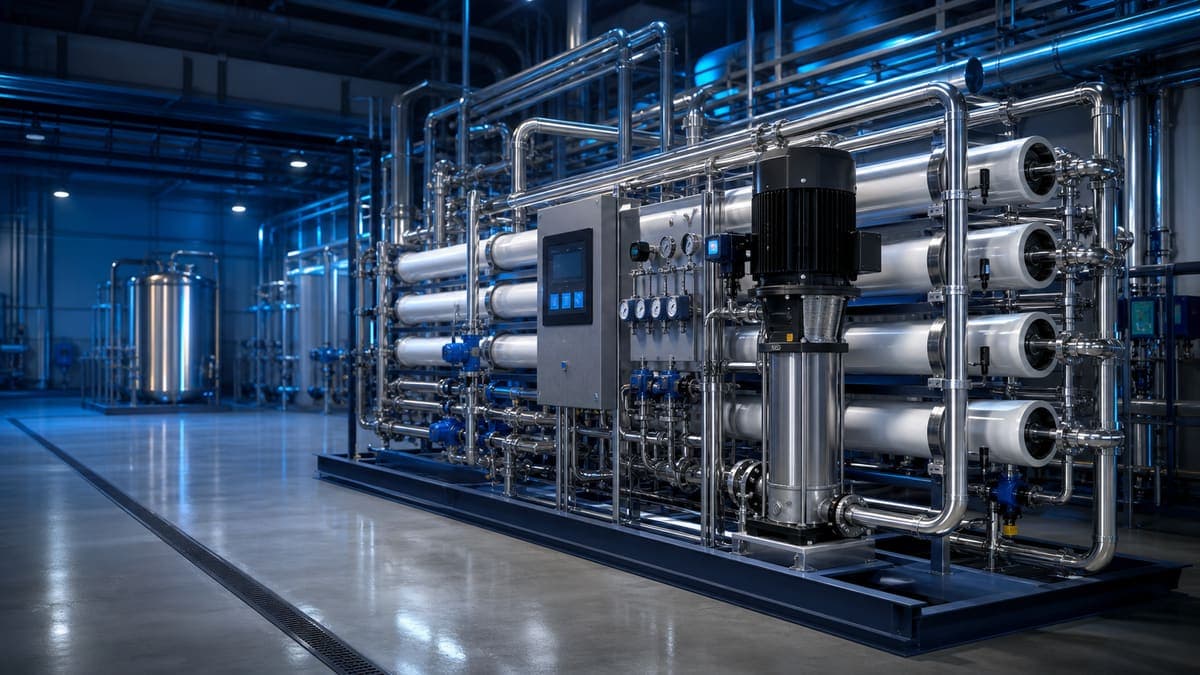
Achieving permeate recoveries in the 75–90% range with reverse osmosis (RO) is standard practice for many industrial and municipal applications. However, certain drivers necessitate pushing beyond this threshold, often into the 90-98% range, or even towards Zero Liquid Discharge (ZLD). These drivers include severe water scarcity, stringent discharge regulations (e.g., limits on total dissolved solids (TDS) or specific constituents in effluent), and the economic imperative to minimize fresh water intake and wastewater disposal costs. This scenario is the appropriate entry point when conventional RO recovery limits, primarily dictated by scaling or osmotic pressure, are insufficient to meet these operational and regulatory demands. It signifies a strategic shift from simple water purification to advanced water management and resource maximization.
2. Feed characteristics & key risks
High-recovery RO systems are inherently challenged by feedwaters that concentrate undesirable constituents. Key characteristics include high TDS, high concentrations of scaling ions (calcium, magnesium, barium, strontium, silica), high alkalinity, and potentially high organic content.
The primary risks encountered are:
- Scaling: As water is recovered as permeate, non-permeating inorganic salts become highly concentrated in the concentrate stream. This can lead to supersaturation and precipitation of sparingly soluble salts like calcium carbonate (CaCO₃), calcium sulfate (CaSO₄), barium sulfate (BaSO₄), strontium sulfate (SrSO₄), and silica (SiO₂), particularly in later RO stages where concentration factors are highest.
- Fouling: Elevated concentrations of colloids, suspended solids, organic matter, and microorganisms can lead to membrane surface fouling, increasing operating pressure and reducing flux.
- Osmotic Limits: With very high TDS feedwaters, the osmotic pressure difference across the membrane can become substantial, requiring extremely high feed pressures, which can be energy-intensive and impact membrane lifespan.
- Regulatory Drivers: Failure to manage concentrate effectively can result in non-compliance with discharge permits, leading to fines and operational shutdowns.
3. Concentrate / reject routing
The management of concentrate (also known as reject or brine) is the defining challenge of high-recovery RO. Water treatment does not make matter disappear; it merely separates it. The primary goal is to minimize the volume of the final, highly concentrated reject and ensure its environmentally compliant or economically viable disposition.
In a multi-stage high-recovery RO system (e.g., 2-stage or 3-stage concentrate-staged RO), the reject from the first stage becomes the feed to the second, and so on. At each successive stage, the permeate is extracted, and the remaining concentrate is further enriched in dissolved solids.
The routing of the ultimate, highly concentrated reject stream depends heavily on the project's ZLD mandate and economic viability:
- Further Membrane Concentration: For extremely high recoveries (e.g., >95%), the concentrate from a conventional RO system might be fed to a specialized brine concentrator RO (BCRO), vibrating membrane systems (e.g., VSEP), or forward osmosis (FO) systems. These technologies can often handle higher TDS and/or suspended solids, further reducing the volume.
- Thermal Evaporation: If further membrane separation becomes uneconomical or technically infeasible due to extreme saturation or osmotic pressure, the concentrate can be directed to mechanical vapor recompression (MVR) evaporators or multi-effect distillers (MED). These thermal processes vaporize the water, producing high-purity distillate (which can be recycled to the plant) and an even smaller volume of super-saturated brine.
- Crystallization: To achieve true Zero Liquid Discharge, the concentrated brine from evaporators is fed to crystallizers. These units further remove water, precipitating dissolved solids into a solid crystalline cake (e.g., mixed salts, sodium chloride, calcium sulfate). This solid waste can then be sent to a landfill or, if valuable, purified for beneficial reuse.
- Deep Well Injection: In certain geological formations, highly concentrated brine can be injected into deep, permeable rock layers that are isolated from potable water aquifers. This is a common disposal method for oilfield produced water but requires extensive geological surveys and regulatory approval.
- Haul-off: For smaller volumes or temporary operations, the highly concentrated brine may be trucked off-site to a permitted disposal facility. This is typically the most expensive option per unit volume.
Every gram of solute entering the RO system, whether removed as a precipitate in pretreatment or passed through to the concentrate, must eventually have a defined disposition pathway.
4. Reference process train options
Achieving high recovery often necessitates a sophisticated and integrated process train:
-
Pretreatment: Robust pretreatment is non-negotiable. This typically includes:
- Coagulation/Flocculation: For removal of suspended solids and colloids.
- Media Filtration: Multi-media filters (MMF) or granular activated carbon (GAC) for larger particulates and some organics.
- Ultrafiltration (UF) or Microfiltration (MF): Superior barrier for suspended solids, colloids, and microorganisms, ensuring an SDI₁₅ consistently below 3.
- Softening: Ion exchange (IX) softening or lime-soda softening to remove hardness (calcium, magnesium) if scaling is a primary concern. This is often employed between RO stages or as a primary pretreatment for the entire train.
- Antiscalant Dosing: Critical for inhibiting crystal growth and dispersion of precipitates, chosen specifically for the feed water chemistry and concentration factors.
- pH Adjustment: pH manipulation can be used to control the solubility of certain scales (e.g., lowering pH to prevent CaCO₃ precipitation, or raising pH to precipitate silica or metal hydroxides prior to RO).
-
Multi-Stage RO (Concentrate Staging): The most common approach. The reject from the first RO stage feeds the second stage, and so on, progressively concentrating the solutes. This configuration optimizes membrane utilization and allows for varying operating conditions (e.g., higher antiscalant dose, lower flux) in the later, higher-concentration stages.
-
Inter-stage Chemistry Adjustment: Between RO stages, it may be necessary to inject additional antiscalant, adjust pH, or even perform an intermediate softening step (e.g., chemical precipitation or IX) to remove scale-forming ions that have reached critical concentrations.
-
Brine Concentrator RO (BCRO): Specialized RO membranes and system designs capable of operating at higher pressures and with higher TDS feeds than conventional RO, pushing recovery further before thermal methods are required.
-
Thermal Evaporation/Crystallization: As detailed in the concentrate routing section, these are the final steps for true ZLD, converting highly concentrated liquid brine into distilled water and solid waste.
5. Operating parameters
Precise control and monitoring of operating parameters are essential for sustainable high-recovery RO:
- SDI₁₅ (Silt Density Index): Maintained strictly below 3, ideally <1.5, to minimize particulate fouling. A higher SDI indicates inadequate pretreatment, leading to rapid flux decline and increased cleaning frequency.
- LSI (Langelier Saturation Index): Used primarily for CaCO₃ scaling. For high-recovery systems, the LSI in the concentrate should be managed aggressively through pH adjustment and antiscalant dosing, often targeting values around 0 or slightly negative at the membrane surface for CaCO₃. Other scaling indices (e.g., Stiff & Davis, Ryznar, or specific solubility limits for CaSO₄, BaSO₄, SrSO₄, SiO₂) must also be monitored and controlled, particularly in later stages where concentrations are orders of magnitude higher than in the feed.
- Flux (L/(m²·h) / LMH): Design flux is typically conservative in high-recovery systems, especially in later stages. While standard RO might operate at 15-25 LMH, the final stages of a high-recovery system might be designed for 8-12 LMH to mitigate localized supersaturation and enhance antiscalant effectiveness, extending membrane life and reducing cleaning frequency.
- DP (Differential Pressure / Stage Pressure Drop): Continuous monitoring of differential pressure across each RO stage and individual pressure vessels is critical. A gradual increase in ΔP (e.g., >10-15% over baseline) typically indicates membrane fouling, signaling the need for cleaning. Excessive ΔP can lead to membrane damage.
- Recovery Rate: Actively controlled and often adjusted based on feed water quality fluctuations and real-time scaling potential. Higher recovery means higher concentration factors, thus higher risk.
- Antiscalant Dose: Optimized based on real-time scaling potential models, often requiring higher doses or different chemistries in later RO stages.
6. Digital twin & instrumentation
Instrumentation & Sensors: A comprehensive sensor suite is deployed across the entire process train, from pretreatment to the final RO stage and concentrate management:
- Flow Meters: Permeate, feed, and concentrate flows for each RO stage.
- Pressure Transducers: Feed pressure, inter-stage pressures, and concentrate pressure for each RO stage to calculate ΔP.
- Conductivity Sensors: Feed, permeate, and concentrate conductivity for each stage to track salt rejection and recovery.
- Temperature Sensors: Water temperature for flux normalization and antiscalant effectiveness.
- pH & ORP Sensors: Essential for chemical dosing control, scale management, and disinfectant monitoring.
- Turbidity & SDI Analyzers: Downstream of pretreatment to verify feed water quality to the RO membranes.
- Chemical Dosing Monitors: Verify antiscalant and pH adjustment chemical injection rates.
7. Pilot-Scale vs Industrial RO
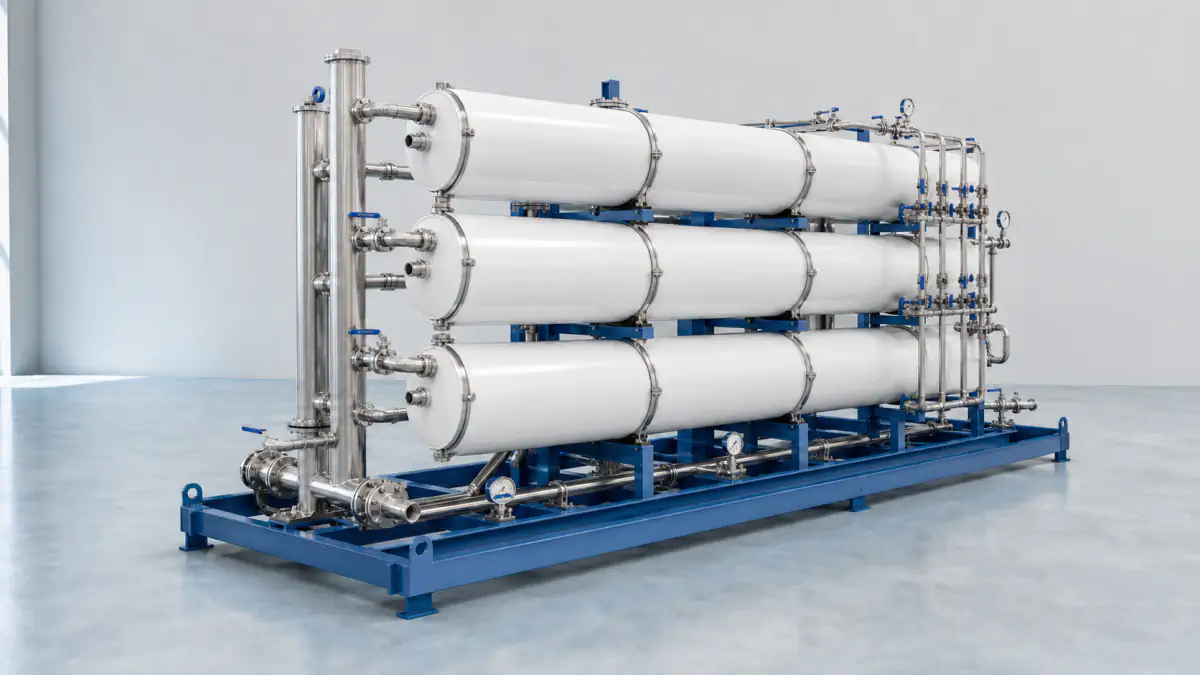
For high-recovery RO applications, the industrial RO series is the primary choice. These systems are designed for continuous, high-volume operation, capable of handling multi-stage configurations, inter-stage chemical addition, and full integration with thermal ZLD components. They feature robust materials, advanced control logic for complex sequences, and full SCADA integration. The pilot-scale RO systems, in contrast, are invaluable for initial pilot studies and temporary high-recovery needs. Their compact, modular design allows for rapid deployment to validate specific membrane types, antiscalant efficacy, and optimal operating parameters (flux, recovery) on-site with actual wastewater, thereby de-risking the eventual full-scale industrial RO deployment.
8. Common engineering mistakes & pilot KPIs
Common Engineering Mistakes:
- Underestimating Concentrate Chemistry: Failing to account for the extreme concentration of specific ions in later stages, leading to unexpected scaling or solubility issues.
- Inadequate Pretreatment: Cutting corners on pretreatment, especially UF/MF or advanced softening, which inevitably leads to premature membrane fouling and scaling.
- Antiscalant Misapplication: Using a generic antiscalant or an insufficient dose, or failing to validate its effectiveness with the highly concentrated brine.
- Ignoring Osmotic Pressure: Designing for high recovery without considering the resulting high osmotic pressure, leading to excessive energy consumption and impractical operating pressures.
- Lack of Mass Balance Validation: Not rigorously tracking and reconciling the mass of solutes through each stage, which can lead to unaccounted-for accumulation or discharge issues.
- Insufficient Piloting: Directly scaling up from lab data or generic designs without on-site piloting, missing critical site-specific feedwater characteristics.
Key Performance Indicators (KPIs) for Piloting:
- Permeate Recovery (%): Achieved vs. target, and its stability over time.
- Permeate Quality (Conductivity/TDS): Ensuring it meets downstream requirements.
- Salt Rejection (%): Overall and per key ion.
- Normalized Flux Decline (%/day): Rate at which flux decreases, indicating fouling potential.
- Differential Pressure Increase (psi/day): Rate at which ΔP increases, another indicator of fouling.
- Antiscalant Efficacy: Measured by how effectively scaling is inhibited at target recovery.
- Specific Energy Consumption (kWh/m³ permeate): Total energy input per unit of clean water produced.
- Membrane Cleaning Frequency: How often CIP is required and its effectiveness.
- Concentrate Volume Reduction (%): How much the initial feed volume is reduced to the final concentrate volume.
- Concentrate Treatability/Disposability: Confirming the final concentrate can be handled by the chosen downstream method.
9. FAQ
Q1: How does high-recovery RO affect membrane lifespan? A1: High-recovery RO inherently places greater stress on membranes due to higher solute concentrations and often higher operating pressures. Without meticulous pretreatment, precise chemical dosing, and stringent operational control, membrane lifespan can be significantly reduced dueating to accelerated fouling and scaling. However, with proper design and management, membrane life can still meet industry expectations.
Q2: Is ZLD always the ultimate goal for high-recovery systems? A2: Not necessarily. While high-recovery RO is a step towards ZLD, the ultimate goal depends on site-specific regulations, economic factors, and water scarcity. The objective might be to achieve a "minimal liquid discharge" (MLD) where concentrate volume is drastically reduced for more economical off-site disposal, or to reach specific discharge limits, rather than absolute zero.
Q3: What are the energy implications of high-recovery RO? A3: Pushing recovery higher often means operating at higher feed pressures, especially in later RO stages due to increased osmotic pressure. This directly translates to higher specific energy consumption (kWh/m³ of permeate). Energy recovery devices (ERDs) are standard in such systems to recuperate energy from the high-pressure concentrate stream, significantly improving overall energy efficiency.
Q4: How important is temperature control in high-recovery RO? A4: Temperature significantly impacts membrane flux, water viscosity, and solubility of scaling salts. Fluctuations can lead to variable performance and increased scaling risk. For consistent high-recovery operation, maintaining a stable feed temperature or accounting for its variations in control algorithms (e.g., flux normalization) is crucial.
Related equipment & product lines
These categories typically support the approach above—open any line to compare brands and models.
For a closer review, use the engineering inquiry form to share feed, capacity, target, and project stage. Submission does not constitute a completed design or performance commitment.