Solutions · Sustainability & ESG
Water Stewardship Certification Support: AWS-aligned evidence and site storytelling
How metering, catchment context, and shared-action narratives support AWS journeys—partnership with legal/reg consultants where required.
Use this guide within its scope
This page supports technical research and option comparison and is marked 2026. Illustrative values are not a quotation, completed process design, certification conclusion, or performance guarantee. Check current regulations, feed data, tests, and OEM records.
Problem
Buyers want basin-context water leadership, not only in-fence compliance.
Technology
Data systems and documentation that map to stewardship steps.
Results
Clearer path from baseline to audit-ready site narrative.
Engineering decision card
Use when
Buyers want basin-context water leadership, not only in-fence compliance.
Evaluate first
Data systems and documentation that map to stewardship steps.
Inputs still required
Feed source and variability, capacity, target quality, operating hours, discharge or reuse boundary, available space, and utilities.
Comparison output
Clearer path from baseline to audit-ready site narrative. The final decision still needs feed data, mass balance, and any necessary testing.
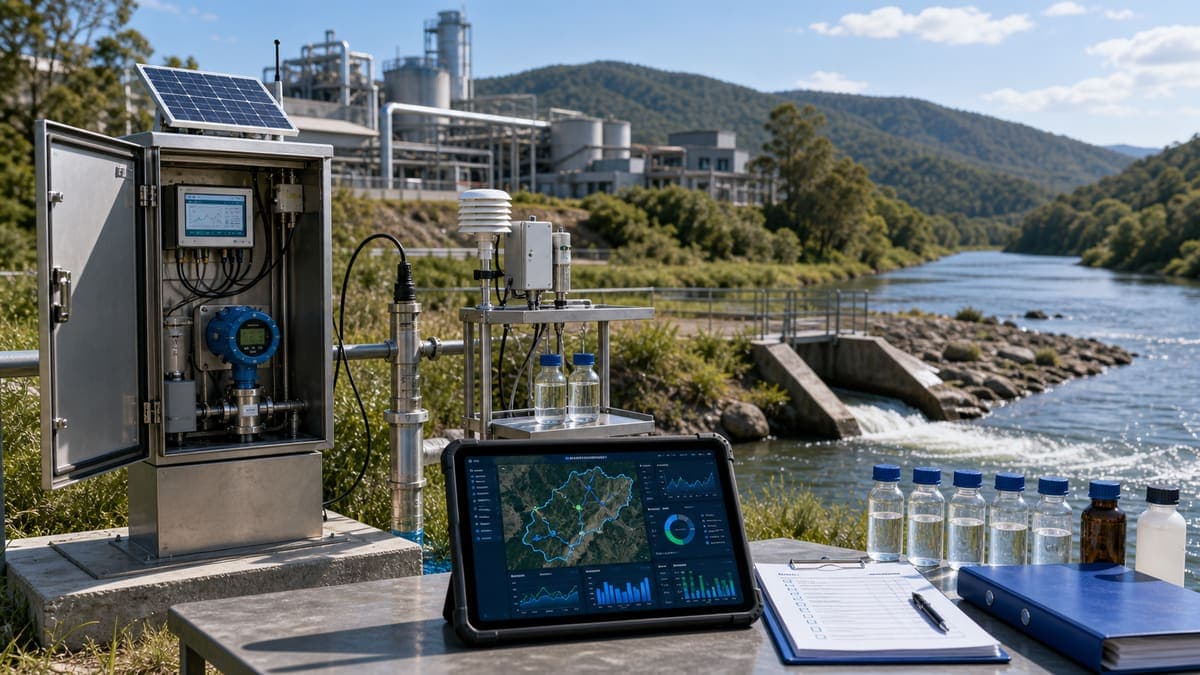
Water Stewardship Certification Support: AWS-aligned evidence and site storytelling
The global industrial landscape, particularly in the UK and EU, is undergoing a profound transformation driven by both climate imperatives and stringent ESG reporting demands. While carbon emissions frequently dominate headlines, the escalating threat of water risk – encompassing scarcity, pollution, and regulatory shifts – is emerging as an equally critical "gating factor" for market access and investment. For international industrial buyers and supply chains in 2026, robust water stewardship is no longer an optional add-on but a fundamental pillar of operational resilience and export market credibility.
Beyond Compliance: Integrating Water into Carbon Strategy
Water management is intrinsically linked to energy consumption and, by extension, carbon emissions. Pumping, heating, cooling, and treating water are all energy-intensive processes. By optimizing water use and treatment, companies can simultaneously reduce their energy footprint and associated Scope 1 and 2 emissions. This integrated approach is essential for meeting comprehensive ESG targets and demonstrating true sustainability leadership to discerning UK and EU buyers.
Worked energy / carbon sketch
Consider an industrial facility in a region with medium water stress that currently relies on an energy-intensive wastewater treatment process before discharge. To reduce both water impact and operational costs, they invest in an upgrade that significantly improves energy efficiency while maintaining discharge quality.
Illustrative Scenario: Wastewater Treatment Plant Upgrade
- Process: Upgrade of an aeration system in an activated sludge plant.
- Assumptions:
- Plant treats 200 m³/hour of wastewater.
- Operations run 7,800 hours/year (approximately 325 days, 24/7).
- Energy consumption before upgrade: 0.55 kWh/m³ treated (typical for older aeration systems).
- Energy consumption after upgrade: 0.30 kWh/m³ treated (achievable with modern, optimized blowers and controls).
- Grid carbon intensity factor (illustrative for EU/UK 2026): 0.18 kg CO₂e/kWh (reflecting ongoing grid decarbonisation efforts).
Calculation:
-
Energy savings per cubic meter: ΔkWh/m³ = 0.55 kWh/m³ (before) - 0.30 kWh/m³ (after) = 0.25 kWh/m³
-
Total annual treated volume: 200 m³/hour * 7,800 hours/year = 1,560,000 m³/year
-
Total annual energy savings: 1,560,000 m³/year * 0.25 kWh/m³ = 390,000 kWh/year
-
Total annual carbon emissions reduction: 390,000 kWh/year * 0.18 kg CO₂e/kWh = 70,200 kg CO₂e/year = 70.2 tonnes CO₂e/year
This back-of-envelope calculation illustrates how a single process optimization, when quantified with verifiable data, translates directly into significant energy and carbon footprint reductions, enhancing both operational efficiency and ESG reporting.
Traditional vs engineering evaluation path
| Topic | Project-based AWS prep | Embedded metering + narrative (engineering evaluation path) |
|---|---|---|
| Data | Spreadsheets and annual grab samples. | Continuous flow, quality, and energy tied to catchment context. |
| Evidence | Consultant-built binders; weak live link to ops. | Dashboards and exports that survive auditor follow-ups. |
| Value | Certificate on the wall; limited OPEX feedback. | Stewardship loop tied to kWh, chemicals, and reuse %. |
Q1: What is AWS certification, and why is it important for my business in 2026?
The Alliance for Water Stewardship (AWS) Standard is a global framework for major water users to understand their water use and impacts, and to work collaboratively for sustainable water management. For industrial businesses in 2026, particularly those exporting to the UK and EU, AWS certification signals serious commitment to environmental stewardship. It's a critical tool for mitigating water-related risks (physical, regulatory, reputational), demonstrating compliance with evolving ESG due diligence regulations, and meeting the non-financial reporting expectations of increasingly sustainability-focused buyers and investors. It translates good intentions into verifiable action.
Q3: Is AWS certification and comprehensive water data relevant if my operations aren't in a water-stressed region?
Absolutely. While managing water scarcity is a key driver for AWS, the standard promotes holistic water stewardship that applies universally. It addresses water quality, water governance, and the integration of water management with other sustainability goals (e.g., energy efficiency and carbon reduction). Even in water-abundant regions, demonstrating responsible water use is essential for maintaining your social license to operate, satisfying international supply chain demands (especially from the UK and EU), optimizing operational efficiency, and reducing embedded carbon emissions associated with water processing. Robust data ensures transparency and proactive risk management, regardless of immediate stress levels. To explore potential savings for your specific operations, use the interactive Carbon Savings Calculator located below this article.
Carbon savings calculator (illustrative)
Estimate annual electricity savings and avoided CO₂e when specific energy improves (e.g. after ERD, VFD tuning, or train optimization). Replace defaults with your meter data and your grid emission factor from your utility or ESG methodology.
ΔkWh/year ≈ Q(m³/h) × hours/year × (kWh/m³before − kWh/m³after) · tCO₂e ≈ ΔkWh × factor / 1000
Δ specific energy: 1.00 kWh/m³
Estimated electricity savings: 800,000 kWh/year
Indicative avoided emissions: 336 tCO₂e/year
Related equipment & product lines
These categories typically support the approach above—open any line to compare brands and models.
- Instrumentation & SensorsOnline measurement and control: flow, level, pressure, and water-quality sensors indexed from the Lenntech instrumentation hub.View category →
- Pilot Units TestingPilot rigs and trial modules for process validation and feasibility studies.View category →
- UF ModulesUltrafiltration modules for suspended solids and colloid removal.View category →
For a closer review, use the engineering inquiry form to share feed, capacity, target, and project stage. Submission does not constitute a completed design or performance commitment.