Water Treatment Chemicals
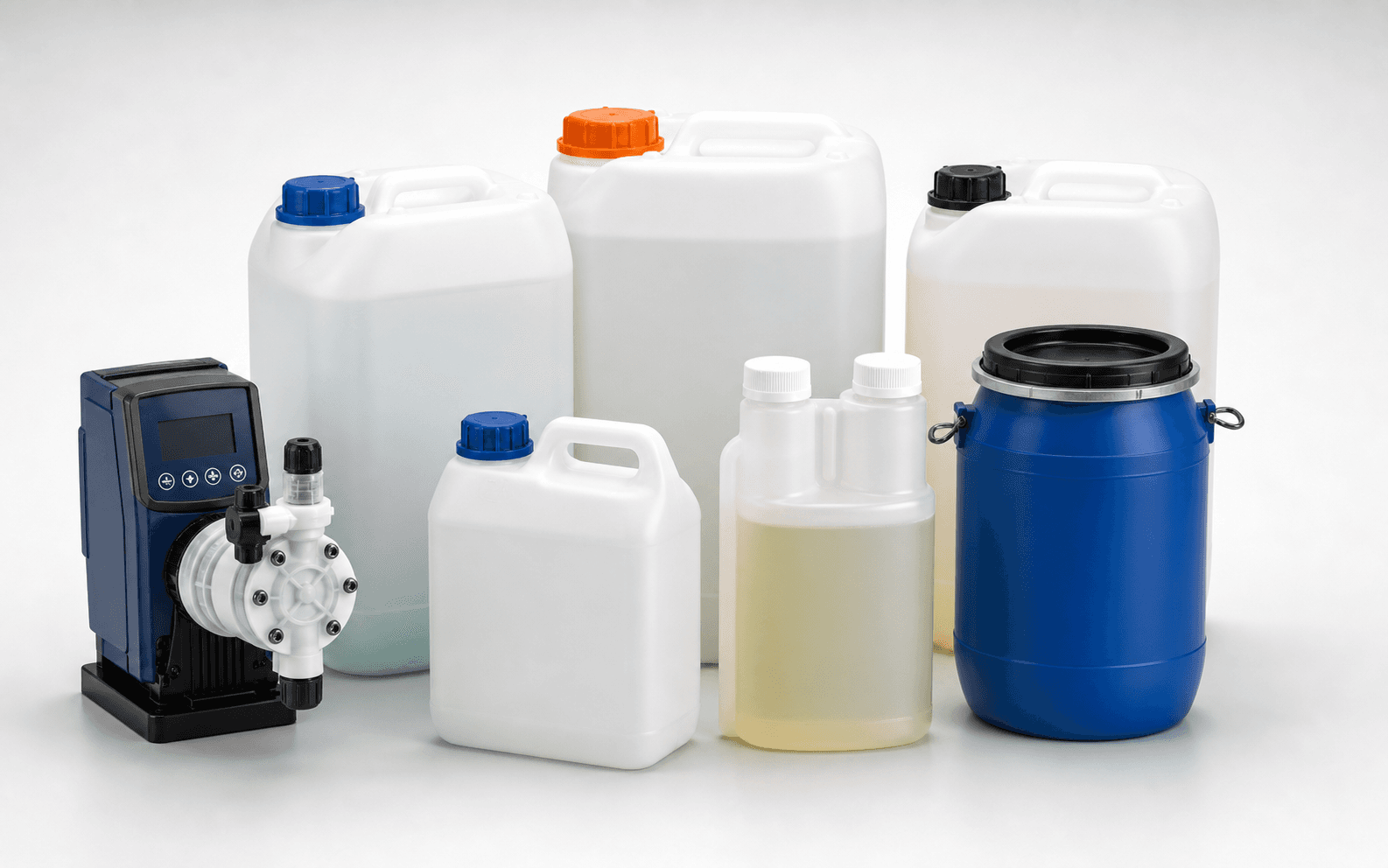
Effective water treatment is crucial for maintaining operational efficiency, ensuring product quality, and meeting stringent environmental discharge regulations across industrial and municipal applications. The selection and application of water treatment chemicals are tailored to address specific water quality challenges, which can vary significantly due to feedwater sources, process demands, and desired effluent characteristics.
Understanding the precise function of each chemical category is key to optimizing treatment programs. This section outlines the primary types of water treatment chemicals and their roles in managing water systems.
Antiscalants
Antiscalants, also known as scale inhibitors, prevent the formation of mineral scale on surfaces in contact with water. Scale is a precipitate of normally soluble solids (e.g., calcium carbonate, calcium sulfate, calcium silicate) that become insoluble, often exacerbated by increased temperature. These chemicals are typically surface-active, negatively charged polymers that attach to mineral particles as they begin to merge, disrupting the crystallization structure and preventing scale formation. The inhibited particles are then dispersed and remain in suspension. Common examples include phosphate esters, phosphoric acid, and low molecular weight polyacrylic acid solutions.
Coagulants and Flocculants
These chemicals are used to remove suspended solids and colloids from water.
Coagulants
Coagulants destabilize suspended particles, allowing them to aggregate. This process is highly dependent on the chemical dose, pH, and colloid concentrations. Positive ions with high valence are preferred, such as aluminum (e.g., as Al2(SO4)3-) and iron (e.g., as FeCl3 or Fe2(SO4)3-, or FeSO4 oxidized to Fe3+). Calcium hydroxide (Ca(OH)2) can be applied as a co-flocculent to adjust pH levels. Typical iron doses range from 10 to 90 mg/L, with higher doses required in the presence of salts.
Flocculants
Following coagulation, flocculants promote the formation of larger, more easily settled or filtered flocs. Polymer flocculants, or polyelectrolytes, are water-soluble polymers with molar weights between 10^5 and 10^6 g/mol. Their effectiveness is specific to their charge (cationic, anionic, or polyampholytic) and molecular structure, facilitating bond formation between destabilized particles.
Biocides and Disinfectants
These chemicals are essential for controlling microbial growth and eliminating unwanted microorganisms in water systems.
Biocides and Disinfectants
Disinfectants kill microorganisms. Common types include chlorine (typically dosed at 2-10 mg/L), chlorine dioxide, ozone, and hypochlorite. Chlorine dioxide (ClO2) is an effective biocide at concentrations as low as 0.1 ppm across a wide pH range, penetrating bacterial cell walls and reacting with vital amino acids. It is primarily used for surface waters with odor and taste issues, drinking water preparation, and piping disinfection. Ozone (O3) is a strong oxidant with a short lifespan, breaking down odor, bacteria, and viruses through oxidation. It is used in pharmaceutical, drinking water, process water, ultra-pure water preparation, and surface disinfection. Hypochlorite, while used for disinfection, is less widely applied due to environmental concerns regarding bromate formation.
Algaecides
Algaecides specifically target and kill algae, including blue and green algae. Examples include copper sulfate, iron salts, rosin amine salts, and benzalkonium chloride. While effective against algae, their use for large algal blooms is often limited by environmental considerations, and they do not remove toxins released by algae prior to death.
pH Control
Maintaining optimal pH levels is critical for preventing corrosion, controlling solubility, and ensuring the efficacy of other treatment chemicals.
Neutralizing Agents and pH Conditioners
To increase pH levels, neutralizing agents such as sodium hydroxide solution (NaOH), calcium carbonate, or lime suspension (Ca(OH)2) are used. To decrease pH levels, diluted sulfuric acid (H2SO4) or diluted hydrochloric acid (HCl) are applied. The dose depends on the water's initial pH and the desired adjustment, often targeting a pH of approximately 7 to 7.5. Neutralization reactions can cause a rise in temperature. pH adjustment is also vital in municipal water to prevent pipe corrosion and lead dissolution.
Corrosion Inhibitors
Corrosion inhibitors protect metallic surfaces from degradation, which can lead to system failures, deposition of corrosion products, and efficiency loss. These chemicals react with or adsorb onto metallic surfaces to form a protective film.
Types of Corrosion Inhibitors
- Passivity Inhibitors (Passivators): Shift the corrosion potential to force the metal into a passive state. Examples include oxidizing anions (chromate, nitrite, nitrate) and non-oxidizing ions (phosphate, molybdate).
- Cathodic Inhibitors: Hinder the recombination and discharge of hydrogen (e.g., arsenic, antimony compounds) or precipitate as oxides to form a protective layer (e.g., calcium, zinc, magnesium ions).
- Organic Inhibitors: Form a hydrophobic film on the metal surface, adsorbed based on their ionic charge and the surface charge.
- Precipitation Inducing Inhibitors: Cause the formation of protective precipitates on the metal surface, such as silicates and phosphates.
- Volatile Corrosion Inhibitors (VCI): Transported by volatilization in closed environments, condensing on metal surfaces and hydrolyzing to liberate protective ions (e.g., morpholine, hydrazine, salts of dicyclohexylamine).
Boiler Water Treatment Programs
Boiler water chemicals encompass a range of treatments designed to protect boiler systems and optimize their performance. These programs typically address:
- Oxygen Scavenging: Preventing oxygen-induced oxidation reactions.
- Scale Inhibition: Preventing mineral deposition on heat exchange surfaces.
- Corrosion Inhibition: Protecting boiler components from metal degradation.
- Antifoaming: Controlling foam formation within the boiler.
- Alkalinity Control: Maintaining appropriate pH levels for system protection.
Antifoams and Defoamers
Foam, a mass of gas bubbles dispersed in a liquid, can significantly reduce equipment capacity and increase process costs. Antifoam and defoamer blends, often containing oils combined with silica, break down foam by leveraging silicone's incompatibility with aqueous systems and its ease of spreading. These compounds are chemically inert, odorless, tasteless, non-volatile, non-toxic, and non-corrosive. They are available as powders (modified polydimethylsiloxane, not for watery solutions) or emulsions (aqueous polydimethylsiloxane fluids, suitable for watery solutions).
Oxidation Chemicals
Chemical oxidation processes utilize oxidants to reduce chemical oxygen demand (COD) and biochemical oxygen demand (BOD), and to remove both organic and oxidizable inorganic components. These processes can fully oxidize organic materials to carbon dioxide and water, though this level of treatment is not always required.
Common Oxidants
- Hydrogen Peroxide (H2O2): A safe, effective, powerful, and versatile oxidant used for odor control, corrosion control, and oxidation of organic, metal, and toxic compounds. Difficult pollutants may require activation with catalysts like iron, copper, or manganese.
- Ozone (O3): In addition to disinfection, ozone purifies water by breaking down organic contaminants and converting inorganic contaminants (e.g., nitrite, iron, manganese, cyanide, pesticides) into insoluble forms that can be filtered out.
- Oxygen: Can be applied as an oxidant, notably for the oxidation of iron and manganese.
Ion Exchange Resin Cleaners
Ion exchange resins require periodic cleaning to remove contaminants that accumulate and are not removed during regeneration, ensuring their continued reuse and performance.
Cleaning Agents
Common cleaning chemicals include sodium chloride, potassium chloride, citric acid, and chlorine dioxide. For organic contaminants, chlorine dioxide cleansing is effective. Resins should be regenerated prior to cleaning. A typical application involves passing a 500 ppm chlorine dioxide solution through the resin bed to oxidize contaminants.
General Considerations for Chemical Selection
When selecting water treatment chemicals, engineers must consider several factors:
- Feedwater Variability: The fluctuating composition of raw water sources dictates the adaptability and robustness required of chemical treatment programs.
- Materials Compatibility: The chosen chemicals must be compatible with system materials to prevent degradation and ensure system longevity. Certified data regarding material compatibility is typically found in OEM bulletins and Safety Data Sheets (SDS).
- Regulatory and Discharge Constraints: Compliance with local and national environmental regulations for effluent discharge is paramount, influencing chemical selection and dosing strategies.
- Certified Data: Detailed information on chemical properties, dose rates, and safety guidelines is provided in OEM bulletins and Safety Data Sheets (SDS), which are essential resources for accurate and safe application.