Solutions · Application Scenarios
Boron and silica control: boiler and UPW polishing pain points
Staged barriers with chemistry control and measured passage trends. Predictable permeate/effluent with managed reject streams.
Use this guide within its scope
This page supports technical research and option comparison and is marked 2026. Illustrative values are not a quotation, completed process design, certification conclusion, or performance guarantee. Check current regulations, feed data, tests, and OEM records.
Problem
Silica and boron limits break recovery and uptime narratives overnight.
Technology
Staged barriers with chemistry control and measured passage trends.
Results
Predictable permeate/effluent with managed reject streams.
Engineering decision card
Use when
Silica and boron limits break recovery and uptime narratives overnight.
Evaluate first
Staged barriers with chemistry control and measured passage trends.
Inputs still required
Feed source and variability, capacity, target quality, operating hours, discharge or reuse boundary, available space, and utilities.
Comparison output
Predictable permeate/effluent with managed reject streams. The final decision still needs feed data, mass balance, and any necessary testing.
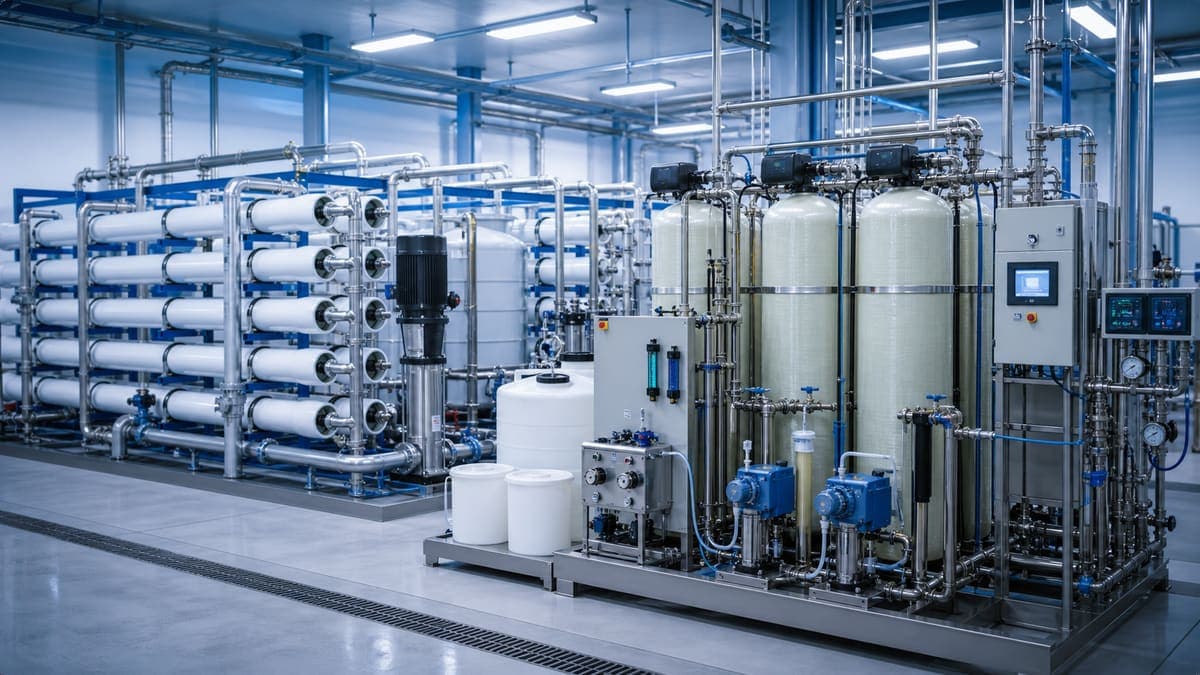
1. Process context & when this scenario is the right entry point
Boron and silica are critical contaminants in industrial water treatment, particularly for boiler feedwater and ultrapure water (UPW) production. Their presence, even at trace levels, can lead to significant operational issues and product quality degradation.
For boiler feedwater, silica is a major concern. It can polymerize and deposit as a hard, glassy scale on boiler tubes, reducing heat transfer efficiency, increasing fuel consumption, and potentially leading to tube failure due to overheating. Additionally, volatile silica can carry over with steam into turbines, forming deposits on turbine blades, which reduces efficiency and requires costly shutdowns for cleaning. Boron can also contribute to corrosion mechanisms in high-pressure boilers.
In ultrapure water (UPW) systems used in semiconductor manufacturing, pharmaceuticals, and certain power generation applications, both boron and silica must be reduced to parts-per-billion (ppb) or even parts-per-trillion (ppt) levels. Boron, even in minute quantities, can interfere with semiconductor fabrication processes and reduce the resistivity of UPW. Silica, similar to boiler applications, can form colloidal particles or deposit on sensitive equipment, compromising product quality.
This scenario is pertinent when source water contains elevated levels of boron and/or silica (e.g., geothermal sources, certain brackish waters, or municipal effluents), and the treated water quality requirements are stringent (e.g., >10 MW boiler feed, semiconductor fab, pharmaceutical-grade water). It's also critical when existing RO systems struggle to meet the required removal efficiencies for these specific contaminants.
2. Feed characteristics & key risks
The efficacy of boron and silica removal is highly dependent on their speciation, feed water chemistry, and concentration.
Boron: Typically present in natural waters as un-ionized boric acid (H₃BO₃) at neutral to slightly acidic pH. Boric acid is a weak acid with a pKa around 9.25. Below this pH, it remains largely un-ionized and passes through standard reverse osmosis (RO) membranes with poor rejection (often <50%). As pH increases above 9.5-10.5, boric acid converts to its ionized borate form (H₂BO₃⁻ or HBO₃²⁻), which is effectively rejected by RO membranes, with rejection rates potentially exceeding 95-99% in a second pass. High boron concentrations in feed can pose a toxicity risk to certain plants if concentrate is used for irrigation.
Silica: Predominantly present as un-ionized silicic acid (H₄SiO₄) in most natural waters. Its solubility is influenced by pH, temperature, and other dissolved solids. Silica does not form scale like calcium carbonate; instead, it polymerizes when supersaturated, forming colloidal silica particles that can then deposit as a hard, glassy, irreversible scale on membrane surfaces. This polymerization is accelerated by higher concentrations, lower temperatures, and the presence of other ions or particulates. Langelier Saturation Index (LSI) is not applicable to silica scaling; instead, silica saturation percentage is monitored. Typical RO membrane systems are designed to operate with silica concentrations below its solubility limit, often maintaining concentrate silica below 80-90% of its saturation point to prevent polymerization.
Key Risks:
- Silica Scaling: Irreversible membrane damage from polymerized silica, leading to reduced flux, increased differential pressure (ΔP), and costly membrane cleaning or replacement.
- Boron Breakthrough: Failure to meet product water specifications for boiler feedwater (carryover, corrosion) or UPW (resistivity, process interference).
- Osmotic Pressure: High total dissolved solids (TDS) in the feed water can lead to high osmotic pressure, requiring higher operating pressures for RO, increasing energy consumption and potentially reducing membrane life.
- Regulatory Drivers: Strict discharge limits for boron in some jurisdictions due to its impact on agriculture.
3. Concentrate / reject routing
Adhering to mass balance principles, all boron and silica not removed in the permeate, along with other dissolved solids, will be concentrated in the reject stream from RO or spent regenerant from ion exchange (IX). The disposition of this concentrate is critical:
-
RO Concentrate:
- Discharge to Sewer/Surface Water: The most common option, subject to environmental discharge permits for boron, silica, and other constituents. High concentrations may require further treatment or dilution.
- Further Concentration for ZLD: For zero liquid discharge (ZLD) or near-ZLD applications, the RO concentrate may be sent to thermal evaporators (e.g., mechanical vapor recompression, MVR) or crystallizers. Silica can be particularly challenging in these systems, often requiring chemical precipitation (e.g., with magnesium oxide/hydroxide) or removal before thermal treatment to prevent severe scaling on heat transfer surfaces. Boron remains soluble but will be concentrated in the brine.
- Evaporation Ponds: For sites with available land and appropriate climate, this can be a low-energy option. However, silica polymerization and boron accumulation in the pond sludge/water must be managed.
- Deep Well Injection: A viable option in specific geological formations, subject to stringent permitting and seismic activity assessment.
- Recycle/Reuse: In some cases, RO concentrate may be suitable for less critical applications such as cooling tower makeup (with careful monitoring of silica and boron buildup), dust suppression, or landscape irrigation, provided boron levels are not phytotoxic.
-
Ion Exchange (IX) Regenerant Waste: Spent regenerant from selective boron or silica removal IX resins will contain high concentrations of these contaminants along with regeneration chemicals (e.g., caustic for silica, acid/caustic for boron). This stream typically requires neutralization and may need further treatment (e.g., precipitation, MVR) before discharge or specific disposal protocols.
4. Reference process train options
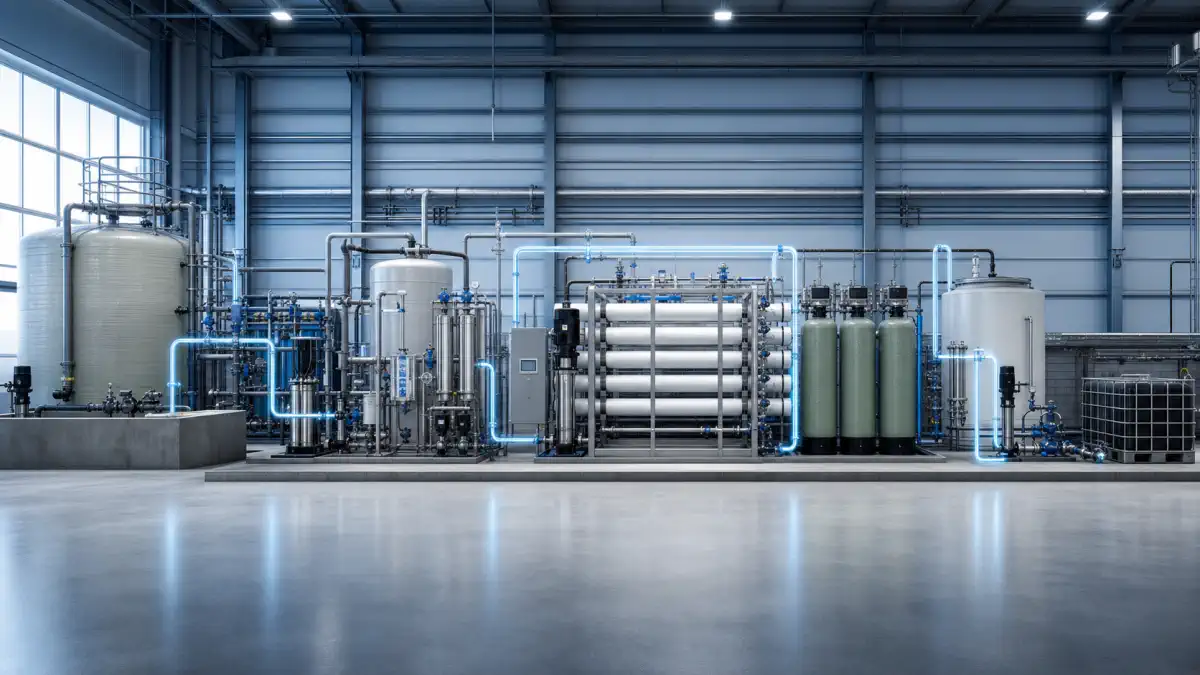
Effective boron and silica removal often requires a multi-barrier approach:
-
Pretreatment:
- Particulate Removal: Multimedia filters (MMF) followed by ultrafiltration (UF) or microfiltration (MF) are essential to reduce Silt Density Index (SDI) and prevent particulate fouling of RO membranes.
- Silica Management: Chemical addition (e.g., acid dosing to lower pH for certain silica species, or specific antiscalants) can extend silica solubility limits or prevent polymerization prior to RO. However, chemical precipitation of silica is complex and generates sludge.
- Initial pH Adjustment: For feedwaters with highly variable pH or to optimize conditions for downstream RO.
-
Primary Reverse Osmosis (RO):
- Removes bulk TDS. Boron rejection at neutral pH will be poor (20-50%), while silica rejection typically tracks TDS (95-99%) as long as it remains unpolymerized and below saturation limits. This stage is critical for overall water recovery.
-
Inter-pass pH Adjustment:
- For effective boron removal, the permeate from the primary RO is typically dosed with caustic (NaOH) to raise the pH to 9.5-10.5. This converts boric acid to the more easily rejected borate ion. This pH adjustment often occurs in a degasifier if CO₂ removal is also desired, or in a dedicated pH adjustment tank.
-
Second-Pass Reverse Osmosis (RO):
- Operated at elevated pH, this stage provides significantly higher boron rejection (>95-99%). It also further polishes permeate conductivity and removes residual silica. The concentrate from this stage is rich in borate and other salts, requiring careful management as outlined in Section 3.
-
Selective Ion Exchange (IX):
- Boron-Selective Resins: Chelating resins containing N-methylglucamine functional groups are highly effective for polishing trace boron levels (down to <50 ppb) when RO alone is insufficient. They can be used post-RO or as a primary treatment if boron is the sole significant contaminant. Regeneration is typically with acid and caustic.
- Silica-Selective Resins: Strong base anion (SBA) resins can remove silica, particularly in polished water applications (e.g., after RO). They are regenerated with concentrated caustic, producing a high-pH, high-silica waste stream.
-
Electrodeionization (EDI) / Continuous Electrodeionization (CEDI):
- For final UPW polishing after RO, removing residual ionic species (including very low levels of boron and silica that might pass through RO). EDI does not require chemical regeneration, making it attractive for high-purity applications.
-
Thermal Treatment (Evaporation/Crystallization):
- As a ZLD component, for highly concentrated RO rejects or IX regenerants. These systems can achieve very high water recovery, but require robust designs to handle severe scaling (especially from silica) and the highly corrosive nature of concentrated brines.
5. Operating parameters
Precise control and monitoring of key operating parameters are paramount for successful boron and silica removal:
- SDI₁₅ (Silt Density Index): A critical measure of particulate fouling potential. For reliable RO operation, the SDI₁₅ of the feed to the RO membranes must be consistently below 3.0, and ideally <1.0 for sensitive UPW applications. Higher SDI₁₅ leads to rapid membrane fouling and increased ΔP.
- LSI / Scaling Posture (Silica Saturation): While LSI predicts calcium carbonate scaling, for silica, the focus is on maintaining its concentration below its saturation limit in the concentrate stream. Typically, the silica concentration in the RO concentrate should be maintained at or below 80-90% of its amorphous silica solubility limit to prevent polymerization. Operating at too high a recovery for the given feed silica can lead to rapid scaling. Boron itself does not typically form scale on RO membranes.
- Flux (LMH): Design flux (Liters per square meter per hour) is usually in the range of 10 to 25 LMH for industrial RO systems, depending on the membrane type, water temperature, and feed quality. Lower design flux rates are often chosen for challenging waters with higher fouling/scaling propensity, offering a buffer against silica polymerization and extending membrane cleaning cycles.
- DP (Differential Pressure): The pressure drop (ΔP) across an RO stage (e.g., inlet pressure minus outlet pressure for a single element, or across multiple elements in series) is a key indicator of membrane fouling or scaling. A consistent increase in ΔP (typically >10-15% over the clean ΔP) signals accumulated foulants or scale and necessitates a membrane cleaning-in-place (CIP) procedure. Rapid ΔP increase often points to severe silica scaling or biological fouling.
6. Digital twin & instrumentation
Instrumentation & Sensors:
- Flow Meters: Electromagnetic or ultrasonic flow meters on feed, permeate, concentrate, chemical dosing lines, and IX regenerant lines.
- Pressure Transducers: At critical points including RO array inlet, inter-stage, and outlet, UF permeate, IX bed inlet/outlet.
- Conductivity Meters: On raw water, UF permeate, RO feed, RO permeate (primary and second-pass), RO concentrate, and EDI permeate.
- pH Sensors: On raw water, chemical dosing points (e.g., acid/caustic), RO feed, inter-pass RO, and IX regenerant waste.
- ORP Sensors: For monitoring oxidation potential, relevant if oxidative biocides are used in pretreatment.
- Temperature Sensors: On raw water, RO feed, and within RO/IX trains.
- SDI Analyzers: Online SDI monitors for RO feed to confirm pretreatment efficacy.
- Silica Analyzers: Online colorimetric analyzers for feed, RO permeate, and concentrate streams to track silica levels and saturation.
- Boron Analyzers: Online spectrophotometric analyzers for feed, RO permeate (primary and second-pass), and IX effluent to monitor boron rejection/removal efficiency.
7. Pilot-Scale vs Industrial RO
For boron and silica removal, the choice between pilot-scale RO and industrial RO depends on the scale of operation and specific application needs. A pilot-scale RO system is ideally suited for pilot testing purposes, enabling precise optimization of pH adjustment strategies for boron, evaluation of specific antiscalant formulations for silica, and testing the performance of various membrane types or selective IX resins under site-specific feed conditions. It's also excellent for temporary requirements or smaller, isolated high-purity demands. For production-scale requirements, such as supplying high-purity boiler feedwater to a power plant or UPW to a large semiconductor fabrication facility, industrial RO provides robust, multi-stage RO systems, often integrated with selective IX and advanced pH control, complete with full SCADA integration for continuous, reliable operation and ZLD-class trains capable of managing challenging concentrate streams.
8. Common engineering mistakes & pilot KPIs
Common Engineering Mistakes:
- Underestimating Silica Risk: Failing to adequately characterize feed silica (total vs. reactive, colloidal) and design for its polymerization kinetics, leading to rapid, irreversible membrane scaling.
- Incorrect pH Strategy for Boron: Assuming standard RO will remove boron or neglecting the critical pH adjustment step to convert boric acid to borate for effective rejection.
- Inadequate Pretreatment: High SDI leads to general membrane fouling, masking the specific challenges of boron/silica removal and increasing cleaning frequency.
- Ignoring Concentrate Disposition: Designing a highly effective treatment train for product water without a viable, permitted, and cost-effective plan for the concentrated waste stream. This is a common pitfall in ZLD planning.
- Poor Chemical Selection: Using generic antiscalants that are ineffective against silica polymerization or failing to select appropriate IX resins for selective removal.
Pilot KPIs (Key Performance Indicators):
- Boron/Silica Rejection Rates: Measured across each RO pass and IX bed at varying pH and recovery rates.
- Membrane Flux Stability: Monitoring flux decay over time without cleaning, indicating fouling propensity.
- ΔP Stability: Tracking pressure drops across RO stages and IX beds to determine cleaning frequencies or regeneration cycles.
- Antiscalant Efficacy: Evaluating different antiscalant types and dosages for their ability to maintain silica solubility and prevent polymerization.
- IX Resin Capacity and Regeneration Efficiency: For selective IX, determining the resin's operational capacity, regenerant consumption, and target breakthrough.
- Operational Cost per Unit Volume: Assessing energy consumption, chemical usage, and waste disposal costs.
9. FAQ
-
Q: Why is boron so difficult to remove by RO at neutral pH? A: Boron primarily exists as un-ionized boric acid (H₃BO₃) at neutral pH. Reverse osmosis membranes are very effective at rejecting charged ions, but uncharged molecules, especially small ones like boric acid, can pass through the membrane pores relatively easily. Raising the pH converts boric acid to its ionized borate form, which is then effectively rejected.
-
Q: How can I effectively prevent silica scaling on my RO membranes? A: Preventing silica scaling involves several strategies: optimizing pretreatment to remove colloidal silica, designing the RO system to operate at a recovery that keeps silica in the concentrate below 80-90% of its saturation limit, using specific silica-active antiscalants, and potentially employing chemical precipitation or selective ion exchange in pretreatment for very high silica feeds.
-
Q: Can a single RO pass remove both boron and silica to UPW levels? A: It is highly unlikely. While a single RO pass can achieve high silica rejection (if properly managed to prevent scaling), its boron rejection at neutral pH is insufficient for UPW requirements. A second-pass RO with inter-pass pH adjustment, or a combination of RO and selective ion exchange, is typically required for UPW-grade boron and silica levels.
-
Q: What are the main challenges when dealing with boron/silica in ZLD systems? A: In ZLD, the primary challenge is managing the extreme concentration of these contaminants. Silica will rapidly polymerize and form hard scale in evaporators and crystallizers, requiring specialized scale control chemicals or pre-precipitation. Boron, while not forming scale, will concentrate in the final brine, potentially increasing corrosivity and requiring specific disposal or recovery methods.
Related equipment & product lines
These categories typically support the approach above—open any line to compare brands and models.
- RO MembranesReverse osmosis membrane elements for municipal and industrial desalination.View category →
- Ion Exchange ResinsCation/anion and mixed bed resin solutions for demineralization and polishing.View category →
- Electrodeionization (EDI)EDI modules and systems for ultrapure water production.View category →
For a closer review, use the engineering inquiry form to share feed, capacity, target, and project stage. Submission does not constitute a completed design or performance commitment.