Solutions · Application Scenarios
COD and TOC reduction: AOPs and specialty carbon polishing
Oxidation and adsorption barriers sized on water matrix and downstream compatibility. Lower organic load into membrane blocks—with accountability for…
Use this guide within its scope
This page supports technical research and option comparison and is marked 2026. Illustrative values are not a quotation, completed process design, certification conclusion, or performance guarantee. Check current regulations, feed data, tests, and OEM records.
Problem
Organics drive biofouling, trace toxics, and discharge non-compliance.
Technology
Oxidation and adsorption barriers sized on water matrix and downstream compatibility.
Results
Lower organic load into membrane blocks—with accountability for oxidation by-products and spent carbon.
Engineering decision card
Use when
Organics drive biofouling, trace toxics, and discharge non-compliance.
Evaluate first
Oxidation and adsorption barriers sized on water matrix and downstream compatibility.
Inputs still required
Feed source and variability, capacity, target quality, operating hours, discharge or reuse boundary, available space, and utilities.
Comparison output
Lower organic load into membrane blocks—with accountability for oxidation by-products and spent carbon. The final decision still needs feed data, mass balance, and any necessary testing.
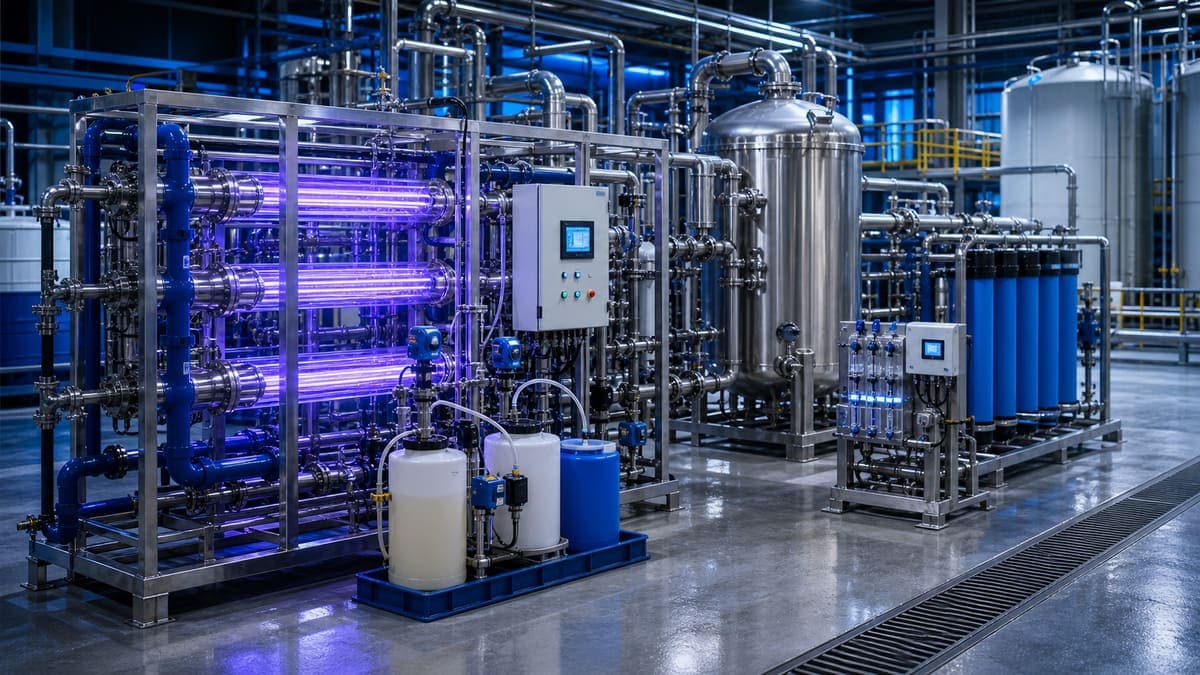
1. Process Context & When This Scenario Is the Right Entry Point
Industrial processes, particularly in the chemical, pharmaceutical, semiconductor, and specialized manufacturing sectors, often generate wastewater streams laden with refractory organic compounds. These organics, characterized by high Chemical Oxygen Demand (COD) and Total Organic Carbon (TOC), are resistant to conventional biological treatment and can pose significant challenges for water reuse or discharge compliance. This scenario applies when:
- Discharge Limits are Stringent: Regulations demand extremely low COD/TOC levels before discharge to municipal sewers or surface waters.
- Water Reuse is Critical: High-purity process water is required, and organics must be virtually eliminated to prevent product contamination, fouling of heat exchangers, or degradation of sensitive equipment (e.g., EDI, ultrapure water systems).
- Biological Treatment is Ineffective: The organic compounds are non-biodegradable or inhibitory to biological processes.
- Color/Odor Removal: AOPs can effectively address aesthetic issues caused by recalcitrant organic compounds.
Advanced Oxidation Processes (AOPs) and specialty carbon polishing serve as powerful tertiary treatment steps, transforming recalcitrant organics into biodegradable by-products or fully mineralizing them, followed by removal of residual organics and salts.
2. Feed Characteristics & Key Risks
The successful implementation of AOPs and subsequent treatment relies heavily on understanding the feed water's characteristics. Key parameters include:
- COD/TOC Concentration: High levels indicate high oxidant demand for AOPs. Typical ranges for AOP feeds can be from tens to thousands of mg/L.
- UV Transmittance (UVT): Low UVT (e.g., <20% at 254 nm) for UV-based AOPs means high UV dose requirements or necessitates pre-treatment for chromophores.
- pH: Influences the efficacy of many AOPs (e.g., Fenton, ozonation) and subsequent precipitation.
- Presence of Scavengers: Bicarbonates, chlorides, nitrates, and other compounds can consume oxidants (e.g., ozone, hydroxyl radicals), increasing treatment cost and potentially forming undesirable by-products (e.g., bromate from bromide).
- Suspended Solids & Turbidity: High levels can shield organics from UV light or cause fouling in GAC beds. Pre-filtration is often necessary.
- Inorganic Constituents: High TDS, hardness, or specific ions can lead to scaling downstream after organic removal or during subsequent membrane concentration.
- Specific Organic Compounds: Identifying target compounds (e.g., pharmaceuticals, pesticides, PFAS) helps in selecting the most effective AOP and monitoring removal.
Key risks include:
- AOP By-product Formation: Incomplete oxidation can generate more toxic or equally recalcitrant intermediate compounds. Oxidants can react with natural organic matter or halides to form disinfection by-products (DBPs).
- Oxidant Quenching: Overdosing quenching agents (e.g., sodium bisulfite) can increase downstream TDS and oxygen demand, while underdosing risks membrane damage.
- GAC Bed Life: High influent TOC, even after AOPs, can rapidly exhaust granular activated carbon, leading to frequent regeneration or replacement.
- Membrane Fouling/Scaling: Residual organics, AOP by-products, or mineral precipitation (due to altered water chemistry or added chemicals) can foul membranes. High TDS from original feed, added chemicals, or mineralized organics can lead to high osmotic pressure.
3. Concentrate / Reject Routing
Water treatment processes utilizing AOPs and specialty carbon polishing, especially when coupled with membrane separation, invariably generate concentrate streams.
- AOPs (Ozone, UV/H₂O₂): These processes primarily transform or mineralize organic compounds. They do not directly generate a concentrate stream in the conventional sense. However, the treated water will contain the oxidized forms of the organics (e.g., carboxylic acids, CO₂), residual quenching chemicals (e.g., sulfates from bisulfite quenching), and the original inorganic salts. This increased TDS load then passes to subsequent treatment.
- Specialty Carbon (GAC/IX): Spent activated carbon or ion exchange resins are removed from service for regeneration or disposal. Regeneration brines (for IX) or backwash water (for GAC) containing concentrated organics and salts must be routed. Often, these are sent to a dedicated wastewater treatment plant, either on-site or off-site, for further processing or disposal. Spent carbon may be thermally reactivated off-site or disposed of as hazardous waste, depending on adsorbed contaminants.
- Membrane Systems (NF/RO): When membranes are used downstream to remove dissolved inorganic salts and remaining organic compounds, a significant concentrate (reject or brine) stream is produced. This stream contains the vast majority of the feed water's original dissolved inorganic salts, the mineralized organic by-products from the AOP, any residual unadsorbed organics from the GAC, and all anti-scalant chemicals. The concentrate volume is typically 15-50% of the feed flow, depending on recovery targets.
- Common Concentrate Dispositions:
- Further Concentration: For high-value water recovery or ZLD (Zero Liquid Discharge) goals, the RO concentrate can be fed to a secondary RO system (high-recovery RO), followed by an evaporator and crystallizer. The solid salt cake is then hauled off to a landfill or used as a resource.
- Deep Well Injection: If permitted and geologically suitable, the concentrate can be injected into deep saline aquifers.
- Haul-off: For smaller volumes or highly hazardous concentrates, specialized waste haulers transport it to approved disposal facilities.
- Discharge (with Permitting): If the concentrate meets discharge limits for TDS, specific ions, and residual organics, it may be discharged to a municipal sewer or surface water body. This is less common for high-TDS streams.
- Blending: The concentrate may be blended with other, less contaminated wastewater streams before final treatment or discharge, provided the combined stream remains within compliance limits.
- Common Concentrate Dispositions:
Crucially, water treatment does not make matter disappear. Every atom, including mineralized organics, ends up either in the purified product water (permeate), the concentrate stream, or adsorbed onto a solid medium.
4. Reference Process Train Options
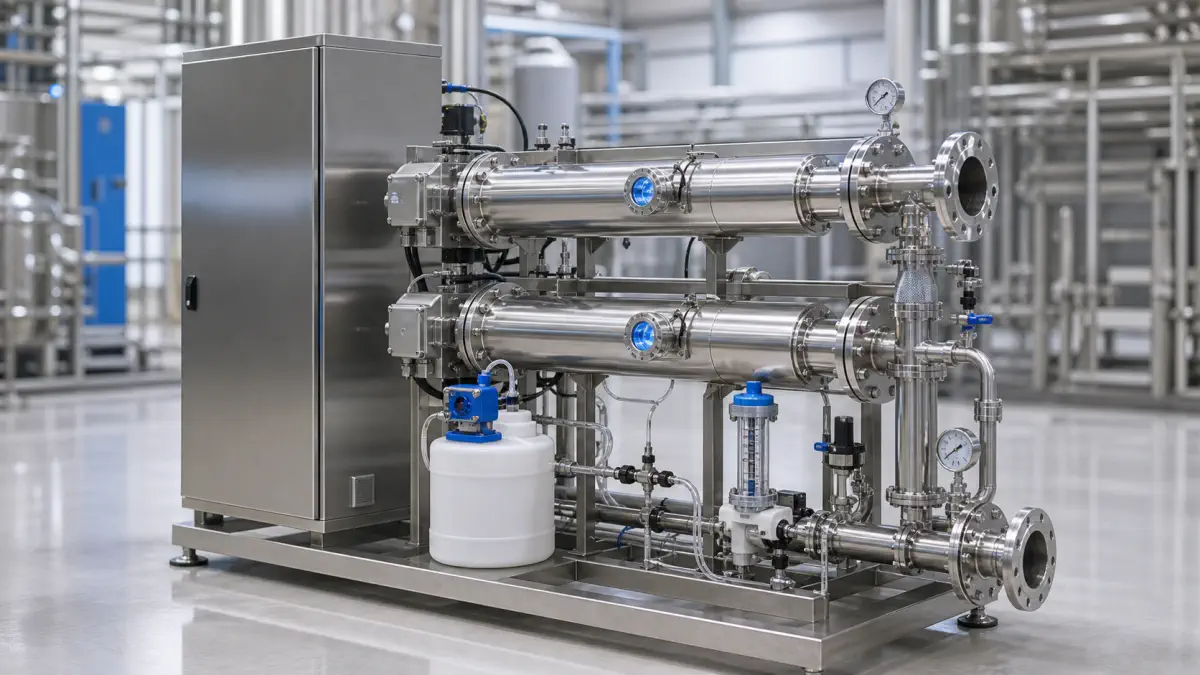
A robust COD/TOC reduction train often involves multiple stages:
- Pre-filtration: Multimedia filters (MMF) or Ultrafiltration (UF) / Microfiltration (MF) to remove suspended solids, colloids, and turbidity, protecting downstream AOP and membrane processes. This is critical for maintaining an SDI₁₅ target of <5 for RO.
- Advanced Oxidation Process (AOP):
- UV/H₂O₂: Effective for a broad range of organics, forming highly reactive hydroxyl radicals.
- Ozonation (O₃): Excellent for color, odor, and many organic pollutants. Can be combined with UV or H₂O₂ for enhanced radical formation.
- Fenton (H₂O₂/Fe²⁺): Highly effective for certain complex organics, but requires pH control and generates iron sludge.
- Quenching: Immediately after the AOP, residual oxidants (e.g., H₂O₂, O₃) must be quenched to prevent damage to subsequent processes, particularly membranes and GAC. Sodium metabisulfite (SMBS) or sodium bisulfite is commonly used.
- Specialty Carbon Polishing:
- Granular Activated Carbon (GAC): Adsorbs residual AOP by-products, unoxidized organics, and quench residuals. Can also remove trace contaminants.
- Ion Exchange (IX): Specifically designed resins can target certain organic acids or specific trace contaminants not removed by GAC.
- Membrane Filtration:
- Nanofiltration (NF): Used for partial softening, removal of larger organic molecules, and some multivalent ions. Can serve as a pre-RO step.
- Reverse Osmosis (RO): For high salt rejection (typically 98-99.5%) and removal of dissolved solids, including smaller organic molecules and AOP by-products, to produce high-purity water. This is where the bulk of the inorganic concentrate is generated.
- The industrial RO platform is ideal for multi-stage RO systems and complex trains demanding high recovery and operational resilience. For piloting or smaller, temporary demands, the pilot-scale RO is suitable.
- Post-RO Polishing:
- Electrodeionization (EDI): For continuous production of ultrapure water (UPW) from RO permeate, further reducing conductivity without the need for chemical regeneration.
- UV Sterilization: For disinfection before final use or discharge.
5. Operating Parameters
Precise control of operating parameters is paramount for performance and longevity:
- SDI₁₅ (Silt Density Index): A critical measure of colloidal and particulate fouling potential for RO/NF membranes. The target SDI₁₅ for RO feed typically needs to be <3-5, ideally <3. Effective pre-treatment and post-GAC filtration are essential to achieve this, as AOPs can sometimes create colloidal precipitates, and GAC can shed fines.
- LSI (Langelier Saturation Index) / Scaling Posture: AOPs and subsequent quenching can alter pH, alkalinity, and introduce new ions (e.g., sulfates), significantly impacting the LSI and other scaling indices (e.g., Stiff & Davis, Ryznar). Maintaining a slightly negative or near-zero LSI is often desired. Antiscalant dosing, precise pH control, and careful water chemistry monitoring are crucial to prevent scaling (e.g., CaCO₃, CaSO₄, silica) on membrane surfaces.
- Flux (L/(m²·h) / LMH): Design flux rates for RO membranes treating AOP-pretreated water are often conservative due to potential for residual fouling. Typical flux ranges for RO are 10-25 LMH, with lower values (e.g., 10-15 LMH) used for more challenging feeds or when maximizing membrane life. Higher fluxes might be possible with very clean feeds but increase the risk of concentration polarization and fouling.
- ΔP (Differential Pressure): Monitoring the pressure drop across individual membrane elements and stages is vital. An increasing ΔP across an RO stage (e.g., an increase of >10-15% above baseline) indicates fouling or scaling and signals the need for a Clean-In-Place (CIP) cycle. Regular monitoring of the stage ΔP helps optimize cleaning frequency and maintain stable operation.
6. Digital Twin & Instrumentation
- Instrumentation & Sensors:
- Flows: Feed, permeate, concentrate flow meters at each stage (e.g., AOP influent, GAC effluent, RO feed, RO permeate, RO concentrate).
- Pressures: Inlet, inter-stage, and outlet pressure transducers for AOP reactors, GAC beds, and membrane stages.
- Conductivity/TDS: Online analyzers for feed, post-AOP, post-GAC, RO feed, RO permeate, and RO concentrate to monitor mineralization, salt rejection, and membrane performance.
- Temperature: Crucial for AOP kinetics, membrane performance, and LSI calculations.
- pH: Online pH meters for AOP control, quenching, and antiscalant dosing points.
- ORP (Oxidation-Reduction Potential): For controlling oxidant dosing in AOPs and verifying complete quenching.
- TOC/COD Analyzers: Online or frequent sampling for feed, post-AOP, and post-GAC effluents to track organic removal efficiency.
- SDI Monitors: Automated SDI₁₅ measurements for RO/NF feed.
- Turbidity Sensors: For pre-filtration efficiency and membrane protection.
7. Pilot-Scale vs Industrial RO
The choice between pilot-scale RO and industrial RO depends on project scale, operational needs, and the stage of process development.
8. Common Engineering Mistakes & Pilot KPIs
Common Engineering Mistakes:
- Inadequate Pre-treatment: Failing to remove sufficient suspended solids or colloids before AOP/GAC/RO leads to premature fouling of all downstream units.
- Underestimating AOP By-products: Not accounting for intermediate organic compounds or DBPs that may be more difficult to remove than the original contaminants, or which may cause downstream issues.
- Insufficient Quenching: Residual oxidants will degrade GAC and damage RO/NF membranes. Inadequate oxidant quenching is a frequent cause of membrane failure.
- Poor GAC Bed Sizing/Management: Overestimating GAC bed life without proper pilot data leads to early breakthrough and poor permeate quality. Lack of provision for efficient backwashing or regeneration can cause operational headaches.
- Ignoring Concentration Effects: Underestimating the impact of AOP by-products and feed salts concentrating in the RO reject, leading to challenges with concentrate disposal or ZLD system design.
- Lack of Integrated Control: Treating AOP, GAC, and RO as isolated units rather than an integrated system, missing opportunities for synergistic optimization.
Key Performance Indicators (KPIs) for Piloting and Full-Scale Monitoring:
- TOC/COD Removal Efficiency: (% reduction from feed to final permeate).
- Specific Oxidant Consumption: (e.g., g O₃/g TOC removed, kWh UV/m³).
- GAC Bed Volumes (BV) to Breakthrough: (number of bed volumes treated until effluent TOC/COD exceeds a target).
- Membrane Permeate Quality: (TDS, TOC, conductivity, specific contaminant concentrations).
- Membrane Salt Rejection: (typically >98% for RO).
- Membrane Recovery Rate: (% of feed water converted to permeate).
- Specific Energy Consumption: (kWh/m³ product water).
- Membrane Cleaning Frequency: (days between CIPs).
- Concentrate Volume and Quality: (volume produced, TDS, TOC, specific regulated contaminants).
9. FAQ
Q1: Can AOPs completely eliminate all TOC? A1: While AOPs can significantly reduce TOC and even mineralize a large fraction, achieving complete elimination (i.e., down to sub-ppb levels) often requires subsequent polishing steps like GAC, RO, or EDI, especially for high-purity water applications. AOPs are excellent for transforming complex organics, making them easier to remove downstream.
Q2: How do I select the right AOP for my specific wastewater? A2: Selection depends on the specific organic compounds present, the wastewater matrix (pH, UVT, presence of scavengers), and target removal efficiency. Pilot testing is crucial to compare UV/H₂O₂, ozonation, or Fenton processes and determine optimal dosing and contact times for your stream.
Q3: What happens if I don't quench residual oxidants before my RO membranes? A3: RO membrane elements, particularly polyamide composites, are highly sensitive to strong oxidants like chlorine, ozone, or hydrogen peroxide. Exposure will cause irreversible damage to the membrane polymer, leading to increased permeate conductivity (salt passage), reduced permeate flow, and premature membrane failure.
Q4: Is ZLD always necessary for RO concentrate from AOP-treated water? A4: Not always. The necessity of ZLD depends on local discharge regulations, the volume of concentrate, the cost of disposal options (e.g., deep well, haul-off), and the potential for water reuse. If a concentrate stream can be safely and economically discharged or blended with other wastewater within compliance limits, ZLD may not be the most cost-effective solution. However, for highly regulated industries or water-scarce regions, ZLD often becomes a requirement or an attractive economic choice.
Related equipment & product lines
These categories typically support the approach above—open any line to compare brands and models.
For a closer review, use the engineering inquiry form to share feed, capacity, target, and project stage. Submission does not constitute a completed design or performance commitment.