Solutions · Application Scenarios
Landfill leachate treatment: organics, ammonia, and salinity under one roof
Integrated biological pretreatment, tight membrane barriers, and engineered concentrate handling. Stable discharge or reuse targets with traceable high-TDS…
Use this guide within its scope
This page supports technical research and option comparison and is marked 2026. Illustrative values are not a quotation, completed process design, certification conclusion, or performance guarantee. Check current regulations, feed data, tests, and OEM records.
Problem
Leachate combines refractory organics, ammonia, and rising salinity—single-unit fixes fail.
Technology
Integrated biological pretreatment, tight membrane barriers, and engineered concentrate handling.
Results
Stable discharge or reuse targets with traceable high-TDS reject management.
Engineering decision card
Use when
Leachate combines refractory organics, ammonia, and rising salinity—single-unit fixes fail.
Evaluate first
Integrated biological pretreatment, tight membrane barriers, and engineered concentrate handling.
Inputs still required
Feed source and variability, capacity, target quality, operating hours, discharge or reuse boundary, available space, and utilities.
Comparison output
Stable discharge or reuse targets with traceable high-TDS reject management. The final decision still needs feed data, mass balance, and any necessary testing.
## 1. Process context & when this scenario is the right entry point
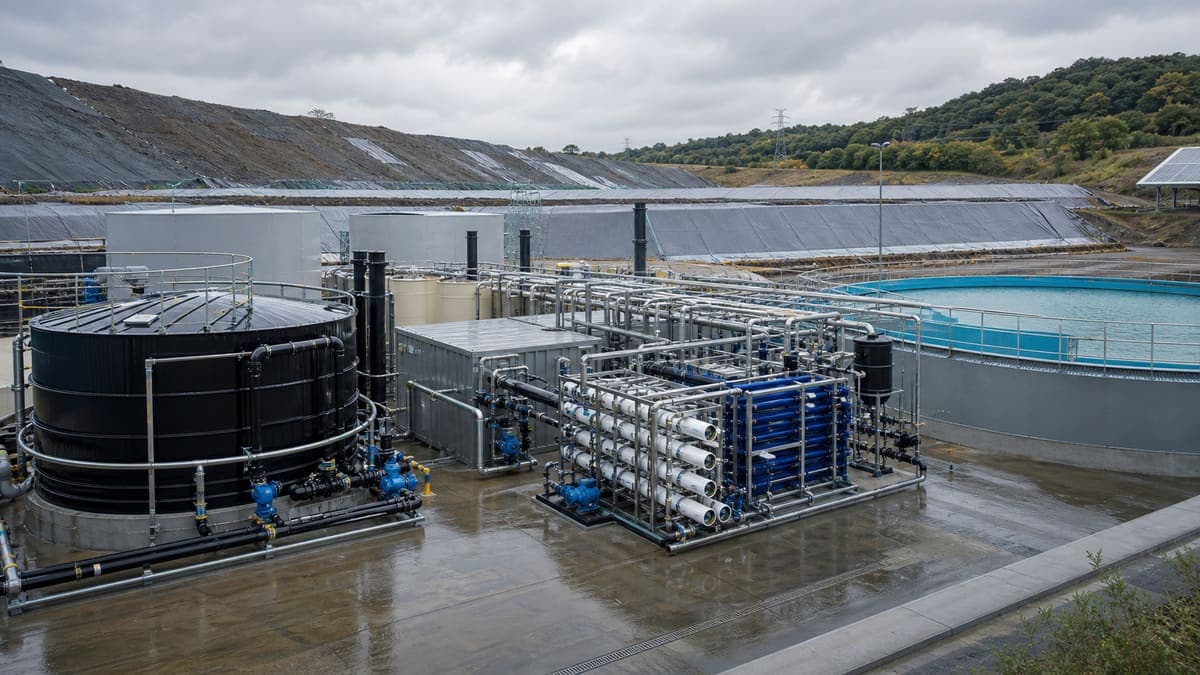
Landfill leachate presents one of the most challenging industrial wastewater streams due to its highly variable and complex composition. Derived from percolated rainwater through decomposing waste, leachate contains a dynamic cocktail of organic matter (BOD, COD), ammonia, heavy metals, suspended solids, and high concentrations of dissolved salts. Treating this effluent is essential for environmental protection, regulatory compliance, and often, to recover valuable water resources.
This scenario is the right entry point when conventional biological treatment alone is insufficient to meet stringent discharge limits for parameters like ammonia, COD, or TDS, or when significant volume reduction and resource recovery (e.g., water reuse) are primary objectives. Facilities facing increasing operational costs for haul-off or seeking to achieve minimal liquid discharge (MLD) or zero liquid discharge (ZLD) will find this integrated biological and membrane approach essential. The complexity of leachate demands a robust, multi-barrier treatment train designed to handle fluctuating loads and diverse contaminant profiles.
## 2. Feed characteristics & key risks
Leachate characteristics are highly dependent on the age of the landfill, waste composition, climate, and initial pre-treatment steps (if any). Typical ranges can be extreme:
- COD: 500 – 50,000 mg/L
- BOD: 100 – 20,000 mg/L
- Ammonia-N: 50 – 3,000 mg/L
- TDS: 1,000 – 50,000 mg/L
- pH: Highly variable, often acidic in young landfills (5-6) and near neutral in mature ones (7-8).
- Other constituents: Heavy metals, volatile organic compounds (VOCs), refractory organics, high hardness, and silica.
These characteristics present significant risks to treatment efficacy and membrane longevity:
- Membrane Fouling: High concentrations of organic macromolecules (humic and fulvic acids), colloidal matter (clays, silicates), and biological activity lead to rapid organic, colloidal, and biofouling of membranes. This is the primary operational challenge.
- Scaling: High concentrations of sparingly soluble salts like calcium carbonate, calcium sulfate, and silica in the concentrate stream can precipitate as mineral scale on membrane surfaces. Langelier Saturation Index (LSI) values often exceed +1.0 in the RO concentrate, indicating a strong scaling propensity.
- Osmotic Pressure: Elevated TDS in the leachate feed necessitates higher operating pressures for reverse osmosis (RO), directly increasing energy consumption and limiting achievable water recovery.
- Ammonia Passage: While RO membranes effectively reject ionic ammonium (NH₄⁺), un-ionized ammonia gas (NH₃) at higher pH can permeate through the membrane, impacting permeate quality.
- Regulatory Compliance: Meeting stringent discharge limits for COD, BOD, ammonia, and TDS often drives the selection of advanced membrane processes.
## 3. Concentrate / reject routing
Adhering to the principle of mass balance, water treatment does not make matter disappear; it merely segregates and concentrates it. For landfill leachate, careful management of reject streams is paramount:
- Biological Treatment Sludge: Sludge produced from activated sludge or membrane bioreactor (MBR) processes, rich in biomass and adsorbed pollutants, is typically dewatered (e.g., by belt filter press or centrifuge). The dewatered cake is then often sent back to the landfill for co-disposal, incinerated, or treated further depending on local regulations. The dewatered liquid (centrate/filtrate) is typically recycled to the headworks of the biological treatment system due to its high nutrient content.
- Ultrafiltration (UF) / Microfiltration (MF) Concentrate: The backwash or reject stream from UF/MF contains concentrated suspended solids, colloids, and some high molecular weight organics that were removed from the biological effluent. This stream is often recycled to the head of the pre-treatment system (e.g., to the coagulation/flocculation step or directly to the landfill for evaporation/infiltration), or, if sufficient capacity exists, to the primary biological treatment unit.
- Nanofiltration (NF) / Reverse Osmosis (RO) Concentrate (Brine): This is the most critical reject stream, containing the vast majority of the dissolved salts, residual organics, ammonia, and heavy metals rejected by the NF/RO membranes. Its disposition dictates the overall process economics and environmental impact:
- Further Volume Reduction: For MLD or ZLD objectives, the RO concentrate is typically fed to downstream processes such as secondary high-recovery RO (e.g., using vibratory or disc tube RO), or more commonly, thermal evaporators and crystallizers. These thermal units separate clean water vapor from a highly concentrated brine or a solid salt cake. The recovered water can be reused, while the solid/slurry residual is sent for off-site disposal (hazardous waste landfill) or solidification.
- Deep Well Injection: In specific geological conditions and with regulatory approval, the concentrated brine may be injected into deep geological formations. This is a capital-intensive solution with stringent geological and permitting requirements.
- Return to Landfill: In some cases, especially for non-hazardous leachate, the RO concentrate might be returned to the landfill itself for controlled evaporation or infiltration, often requiring specific liner and drainage considerations.
- Haul-off: For smaller volumes, or when other options are not feasible, the concentrate may be hauled off-site by truck to a permitted industrial wastewater treatment facility or disposal site. This is typically the most expensive option on a per-unit volume basis.
- Electrodeionization (EDI) Reject: This small-volume stream, generated during continuous regeneration, contains a dilute concentration of ions removed from the RO permeate. It is often recycled to the RO feed to recover some water or combined with the RO concentrate stream for further treatment or disposal.
## 4. Reference process train options
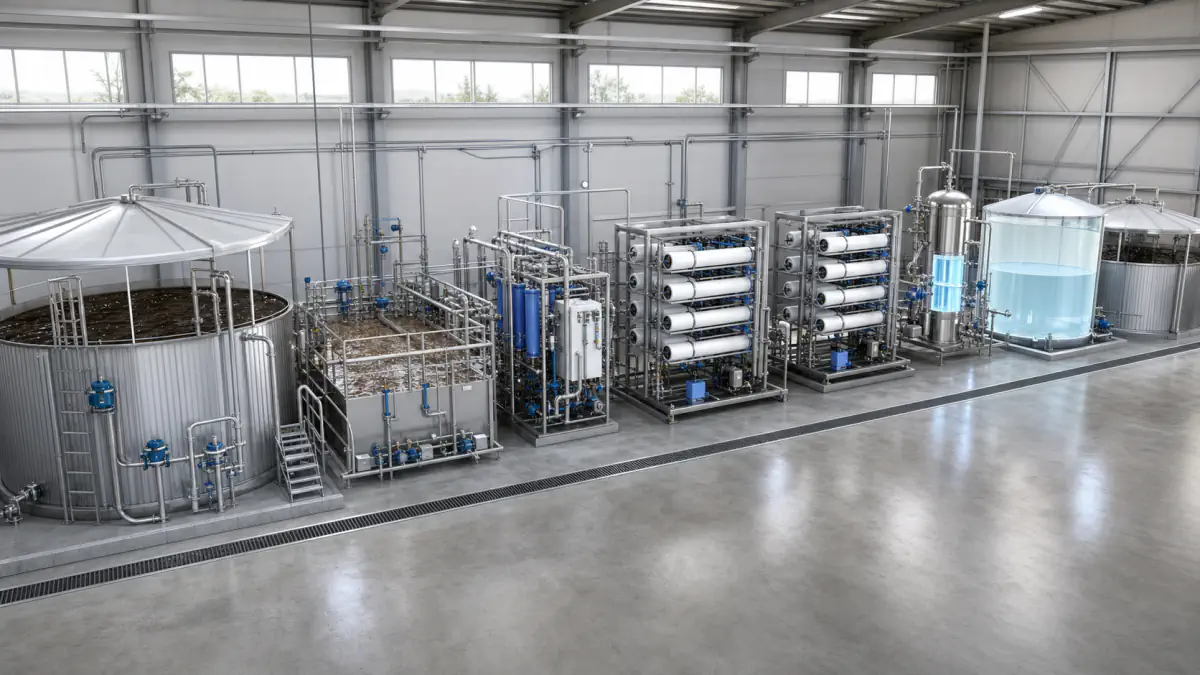
A typical, robust treatment train for landfill leachate integrates multiple technologies:
-
Pre-treatment:
- Screening & Equalization: Initial removal of gross solids and flow/load balancing to buffer downstream processes from variability.
- Chemical Coagulation/Flocculation + Sedimentation/DAF: Essential for removal of suspended solids, colloids, heavy metals, and some complex organics. pH adjustment is frequently necessary for optimal performance.
- Biological Treatment (MBR or Activated Sludge): Primary stage for high-rate BOD/COD removal and critical ammonia removal via nitrification-denitrification. Membrane Bioreactors (MBR) are often preferred due to their superior effluent quality, consistently producing low TSS and excellent SDI₁₅ required for downstream RO.
- Granular Activated Carbon (GAC) / Powdered Activated Carbon (PAC): Post-biological treatment, for adsorption of recalcitrant organics, color, and odor compounds not removed by biological or coagulation processes.
-
Membrane Filtration:
- Ultrafiltration (UF) / Microfiltration (MF): Polishing step after biological/GAC. Acts as a robust barrier for suspended solids, colloidal matter, and microorganisms, safeguarding the subsequent RO/NF membranes. Critical for achieving a consistent SDI₁₅ target.
- Nanofiltration (NF): Can be strategically placed as a pre-RO stage. NF selectively rejects divalent ions (hardness) and larger organic molecules, reducing the scaling potential and organic loading on the RO, potentially at lower operating pressures.
- Reverse Osmosis (RO): The core technology for high-purity water production, effectively removing dissolved salts, remaining trace organics, and heavy metals. Multi-pass RO (e.g., 2-pass RO) is common to achieve very high rejection and meet stringent permeate quality for reuse or ultra-low discharge.
-
Post-treatment (for specific permeate quality requirements):
- Electrodeionization (EDI): If ultra-pure water is required (e.g., boiler feed, specific industrial processes), EDI removes residual trace ions after RO without the need for chemical regenerants.
- UV Disinfection: For microbial inactivation if the permeate is destined for direct reuse applications.
Throughout the process, chemical dosing (e.g., antiscalants, pH adjusters, biocides, cleaning chemicals) is critical for process optimization and membrane health.
## 5. Operating parameters
Precise control and monitoring of key operating parameters are fundamental to the successful and cost-effective treatment of leachate:
- SDI₁₅ (Silt Density Index): This is a critical feed water quality parameter for RO/NF membranes, indicating the fouling potential from colloidal and suspended solids. The effluent from UF/MF should consistently achieve an SDI₁₅ < 3, with an ideal target of < 2 for stable RO operation. Persistent SDI₁₅ values above 5 signal inadequate pre-treatment and will lead to rapid RO fouling.
- LSI (Langelier Saturation Index) / Scaling Posture: The LSI, along with other scaling indices (e.g., for silica, calcium sulfate), is calculated for the concentrate stream of RO/NF. An LSI greater than +0.5 indicates a tendency for calcium carbonate scaling. Antiscalant dosing must be precisely controlled based on feed water chemistry and anticipated concentration factors to maintain the LSI of the concentrate below critical limits, typically below +1.5 to +2.0 for calcium carbonate, depending on the specific antiscalant and membrane type. Silica saturation also requires careful monitoring.
- Design Flux (LMH - L/(m²·h)): This parameter defines the permeate production rate per unit membrane area. Due to the high fouling propensity of leachate, RO/NF design fluxes are significantly lower than for less challenging feeds. Typical operating fluxes for leachate RO range from 8 to 20 LMH, varying based on pre-treatment effectiveness, membrane type, and recovery. Higher fluxes risk accelerated fouling and increased cleaning frequency. UF/MF fluxes are typically higher, ranging from 30 to 80 LMH, but are also dependent on feed quality and cleaning strategy.
- DP (Differential Pressure) / Stage Pressure Drop (ΔP): The pressure drop across a membrane stage (e.g., a bank of RO pressure vessels) is a direct indicator of fouling. A gradual increase in ΔP from the normalized baseline (typically 10-15%) signifies membrane fouling and usually triggers a Clean-in-Place (CIP) cycle. Abnormal or sudden ΔP increases can indicate gross fouling or mechanical issues. Regular monitoring and trending of ΔP are essential for proactive maintenance and optimal cleaning schedules.
## 6. Digital twin & instrumentation
The complexity and variability of landfill leachate treatment make a robust digital twin framework, powered by comprehensive instrumentation, indispensable for operational efficiency and risk management.
Instrumentation & Sensors: A network of precise sensors provides real-time operational data:
- Flow Meters: Indispensable for mass balance calculations, installed on influent, permeate, concentrate, and all critical process and chemical dosing lines.
- Pressure Transmitters: Positioned across all membrane stages, pumps, and filters to monitor system pressures and crucial differential pressures (ΔP) for early fouling detection.
- Conductivity/TDS Probes: Continuously monitor feed, permeate, and concentrate streams to track salt rejection, overall system performance, and concentrate loading.
- pH/ORP Sensors: Essential for pH adjustment control in pre-treatment, monitoring biological process health (ORP), and ensuring optimal conditions for membrane operation and cleaning.
- Temperature Sensors: Crucial for temperature correction of conductivity measurements, flux normalization, and optimizing chemical reactions.
- Turbidity Meters: Post-filtration (e.g., UF/MF effluent) to confirm the effectiveness of pre-treatment and ensure the RO feed meets SDI targets.
- Chemical Dosing Sensors: Level sensors in chemical tanks and precise flow meters on dosing lines ensure accurate chemical consumption tracking and dosage control.
## 7. Pilot-Scale vs Industrial RO
For initial pilot studies, process optimization, or smaller-scale leachate generation sites (e.g., isolated industrial waste facilities or smaller legacy landfills), the pilot-scale RO platform provides flexible, compact, and mobile membrane units. These systems are ideal for validating pre-treatment efficacy, determining optimal operating parameters (flux, recovery, cleaning frequency), and generating crucial data for full-scale design. Their modularity allows for rapid deployment and iterative testing to de-risk complex leachate projects. Conversely, for large-scale municipal or industrial landfill operations requiring continuous, high-volume treatment, robust long-term performance, and seamless plant integration, the industrial RO system offers custom-engineered, multi-stage, and fully automated solutions. This includes complex multi-pass RO configurations, advanced concentrate management trains for ZLD, and full SCADA integration with deep analytical models to ensure maximal water recovery and minimal environmental impact over the operational lifetime.
## 8. Common engineering mistakes & pilot KPIs
Common Engineering Mistakes:
- Underestimating Feed Variability: Designing a fixed-parameter system for a highly dynamic feed like leachate inevitably leads to operational upsets and underperformance. Dynamic pre-treatment controls and flexible membrane systems are critical.
- Inadequate Pre-treatment: The single most frequent cause of membrane fouling and premature RO membrane replacement. Skipping essential coagulation/flocculation, robust biological treatment, or high-quality UF/MF polishing directly impacts RO performance and lifespan.
- Ignoring Concentrate Management: Focusing solely on permeate quality without a viable, cost-effective plan for the high-volume, concentrated reject stream undermines the entire project's economic and environmental viability. Mass balance is key.
- Over-optimistic Recovery Rates: Pushing RO recovery too high given the high TDS and complex scaling potential of leachate rapidly leads to severe scaling, increased cleaning frequency, and costly downtime.
- Poor Chemical Selection & Control: Incorrect selection or improper dosing of antiscalants, biocides, or cleaning chemicals can exacerbate fouling, damage membranes, and increase operational costs.
Pilot Key Performance Indicators (KPIs):
- Normalized Flux Stability: Track permeate flux (LMH) normalized for temperature and pressure, minimizing decline between CIPs.
- Membrane Cleaning Frequency & Effectiveness: Number of CIPs required per month/quarter, percentage of flux recovery post-CIP, and chemical consumption per cleaning cycle.
- Permeate Quality: Consistent achievement of target COD, BOD, ammonia, TDS, and specific ion concentrations.
- Concentrate Volume & Quality: Actual concentrate volume produced (for mass balance validation) and its suitability for downstream processing or final disposal.
- Specific Energy Consumption: Energy (kWh) consumed per cubic meter of permeate produced.
- Specific Chemical Consumption: Consumption of antiscalants, pH adjusters, and cleaning chemicals per cubic meter of permeate.
## 9. FAQ
- Q: Why is robust pre-treatment so critical for landfill leachate RO?
- A: Landfill leachate contains extremely high and variable concentrations of suspended solids, colloidal matter, complex organics, and biological contaminants. Without effective pre-treatment (e.g., biological treatment, coagulation/flocculation, followed by UF/MF), these components rapidly foul RO membranes, leading to severe flux decline, increased cleaning frequency, higher operational costs, and shortened membrane lifespan. Pre-treatment ensures the RO feed consistently meets strict SDI₁₅ and turbidity targets, typically SDI₁₅ < 3.
- Q: How does modular RO manage the high TDS and osmotic pressure challenges of leachate?
- A: modular RO systems are engineered with high-pressure pumps and robust membrane elements designed to withstand elevated osmotic pressures. Critically, the system design prioritizes appropriate recovery rates to manage concentrate LSI and scaling potential effectively. This often involves multi-stage RO (e.g., 2-pass) or specialized high-recovery membrane configurations, potentially followed by thermal concentration, to balance performance with membrane longevity and overall system cost.
- Q: What are the primary concerns regarding ammonia in leachate treatment?
- A: Ammonia (NH₃/NH₄⁺) is a significant pollutant. While RO membranes effectively reject ionic ammonium (NH₄⁺), un-ionized ammonia gas (NH₃), which is prevalent at higher pH values, can permeate through the membrane, impacting permeate quality. Therefore, careful pH control and robust biological nitrification/denitrification (to convert ammonia to nitrogen gas) are often employed upstream of RO to minimize ammonia loading and passage. High concentrations also contribute to osmotic pressure.
- Q: What options exist for final concentrate disposal in a ZLD scenario?
- A: For ZLD-class leachate treatment, the concentrated RO reject (brine) is typically fed to thermal evaporators or crystallizers. These units separate the water, which can be reused, from a solid or semi-solid residual (sludge or salt cake). This solid waste, containing the accumulated salts, metals, and remaining refractory organics, is then managed through secure landfill disposal, solidification, or sometimes incineration, depending on its specific characteristics and local regulatory requirements.
Related equipment & product lines
These categories typically support the approach above—open any line to compare brands and models.
- RO MembranesReverse osmosis membrane elements for municipal and industrial desalination.View category →
- Activated CarbonPowdered and granular activated carbon (PAC/GAC) for adsorption of organics, odor, and trace contaminants.View category →
- UV DisinfectionUV systems and modules for pathogen inactivation and final disinfection barriers.View category →
For a closer review, use the engineering inquiry form to share feed, capacity, target, and project stage. Submission does not constitute a completed design or performance commitment.