Solutions · Application Scenarios
Nitrate and phosphate reduction: tight surface-water discharge classes
Process trains that account for waste biosolids, chemical sludge, and membrane rejects. Demonstrable nutrient mass out via effluent + retained…
Use this guide within its scope
This page supports technical research and option comparison and is marked 2026. Illustrative values are not a quotation, completed process design, certification conclusion, or performance guarantee. Check current regulations, feed data, tests, and OEM records.
Problem
Class IV–style limits require integrated biological and chemical barriers.
Technology
Process trains that account for waste biosolids, chemical sludge, and membrane rejects.
Results
Demonstrable nutrient mass out via effluent + retained solids/concentrates.
Engineering decision card
Use when
Class IV–style limits require integrated biological and chemical barriers.
Evaluate first
Process trains that account for waste biosolids, chemical sludge, and membrane rejects.
Inputs still required
Feed source and variability, capacity, target quality, operating hours, discharge or reuse boundary, available space, and utilities.
Comparison output
Demonstrable nutrient mass out via effluent + retained solids/concentrates. The final decision still needs feed data, mass balance, and any necessary testing.
1. Process context & when this scenario is the right entry point
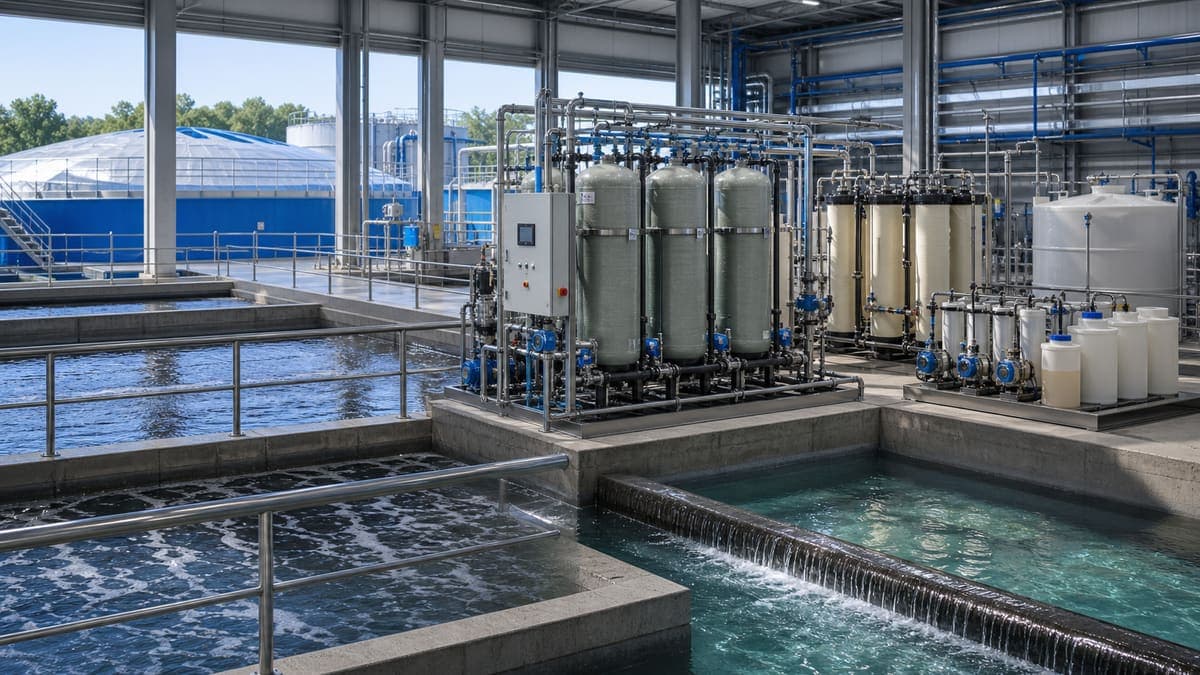
Meeting increasingly stringent surface water discharge limits for nutrients, particularly nitrates and phosphates, poses a significant challenge for industrial and municipal wastewater treatment facilities. While conventional biological and chemical treatment processes can achieve substantial nutrient removal, targets often fall below what these methods can reliably deliver, especially for sensitive receiving waters or where eutrophication is a concern. This scenario becomes critical when discharge permits demand ultra-low effluent concentrations, typically less than 1 mg/L for total nitrogen and below 0.1 mg/L for total phosphorus.
This application is particularly relevant for:
- Upgrading existing wastewater treatment plants (WWTPs) that need to meet new, tighter discharge regulations without full-scale plant reconstruction.
- Industrial facilities with high nutrient loads, such as those in food and beverage processing, fertilizer manufacturing, and agricultural runoff management, where nutrient-rich wastewaters are generated.
- Implementing side-stream or post-treatment polishing steps to remove residual nutrients after primary or secondary treatment, allowing the main plant to operate efficiently while a targeted system handles the final compliance. This approach leverages advanced membrane technology to achieve the necessary removal efficiencies, often in conjunction with optimized biological or chemical pre-treatment.
2. Feed characteristics & key risks
The feed stream for membrane-based nutrient reduction is typically a clarified effluent from an upstream biological or chemical treatment process. Key characteristics include:
- Residual Suspended Solids (TSS): Even after secondary treatment, fine particulates and colloids can be present, contributing to membrane fouling.
- Dissolved Organic Carbon (DOC): Biologically recalcitrant organics can contribute to biofouling.
- Dissolved Inorganic Salts (TDS): A baseline level of background salts influences osmotic pressure and can contribute to scaling.
- Target Nutrients: Residual nitrates (NO₃⁻) and phosphates (PO₄³⁻) are the primary contaminants, but ammonia (NH₄⁺) might also be present if nitrification is incomplete.
- pH: Can vary and impacts scaling potential and membrane performance.
Key risks associated with membrane-based nutrient removal include:
- Membrane Fouling: This is the most prevalent operational challenge.
- Biofouling: Growth of microorganisms on the membrane surface, fueled by residual organics and nutrients.
- Particulate Fouling: Accumulation of suspended solids, colloids, and fine precipitates not removed by pre-treatment.
- Organic Fouling: Adsorption of macromolecules, humic substances, and other dissolved organics.
- Membrane Scaling: Precipitation of sparingly soluble salts on the membrane surface.
- Phosphate Scaling: Calcium phosphate (Ca₃(PO₄)₂) and magnesium ammonium phosphate (struvite, MgNH₄PO₄·6H₂O) are significant risks due to their low solubility, especially at elevated pH and when concentrated in the reject stream.
- Silica Scaling: Can occur if silica levels are high in the feed and concentrated by the membrane.
- Calcium Carbonate/Sulfate Scaling: Standard concerns for any RO/NF system.
- Osmotic Pressure Limitations: High feed TDS can lead to significant osmotic pressure, requiring higher operating pressures for the membranes, which increases energy consumption and limits achievable recovery.
- Regulatory Compliance: Failure to consistently meet ultra-low discharge limits can result in heavy fines and operational restrictions, making process reliability paramount.
3. Concentrate / reject routing
A critical consideration for any membrane-based nutrient removal system is the disposition of the concentrate (reject or retentate) stream. Water treatment does not make matter disappear; nutrients and other dissolved solids are merely concentrated. The strategy for concentrate management is often as complex as the permeate treatment itself.
The concentrate from Reverse Osmosis (RO) or Nanofiltration (NF) will contain a significantly higher concentration of nitrates, phosphates, and other dissolved salts and organic matter rejected by the membranes. Typical routing options include:
- Return to Headworks (Recycle): For some facilities, especially municipal WWTPs, the concentrate can be returned to the plant's influent (headworks). This option requires the main plant to have sufficient capacity and nutrient removal capabilities to re-process the concentrated load without exceeding its own discharge limits. For the tightest discharge classes targeted by this scenario, simple recycle is often insufficient as it merely recirculates the problem.
- Dedicated Chemical Precipitation (for Phosphates): The concentrated phosphate in the reject stream can be effectively removed via chemical precipitation. Dosing with coagulants such as iron salts (ferric chloride, ferrous sulfate), aluminum salts (alum, polyaluminum chloride), or lime (calcium hydroxide) precipitates insoluble phosphate compounds. This process generates a phosphate-rich sludge, which then requires dewatering (e.g., belt press, centrifuge) and disposal to a landfill or, in some cases, beneficial reuse as a soil amendment depending on heavy metal content.
- Struvite Recovery: If the concentrate is rich in both ammonia and phosphate, and magnesium is available, controlled crystallization can be employed to recover struvite (magnesium ammonium phosphate). This not only removes nutrients but also produces a valuable slow-release fertilizer, representing a resource recovery opportunity.
- Evaporation and Crystallization (Zero Liquid Discharge - ZLD): For sites with very strict discharge regulations or where the concentrate volume is small enough to make thermal treatment economically viable, the concentrate can be directed to evaporators and crystallizers. This process separates clean water vapor from a solid crystalline salt residue, achieving Zero Liquid Discharge. This is a high-capital and high-energy solution, usually reserved for extreme cases or where valuable salts can be recovered.
- Off-site Disposal: Hauling the concentrate to a specialized industrial waste treatment facility or for deep well injection (where permitted and geologically suitable) are options, though they incur significant ongoing operational costs.
The chosen concentrate management strategy must be robust, compliant, and cost-effective, directly influencing the overall feasibility and sustainability of the nutrient reduction project.
4. Reference process train options
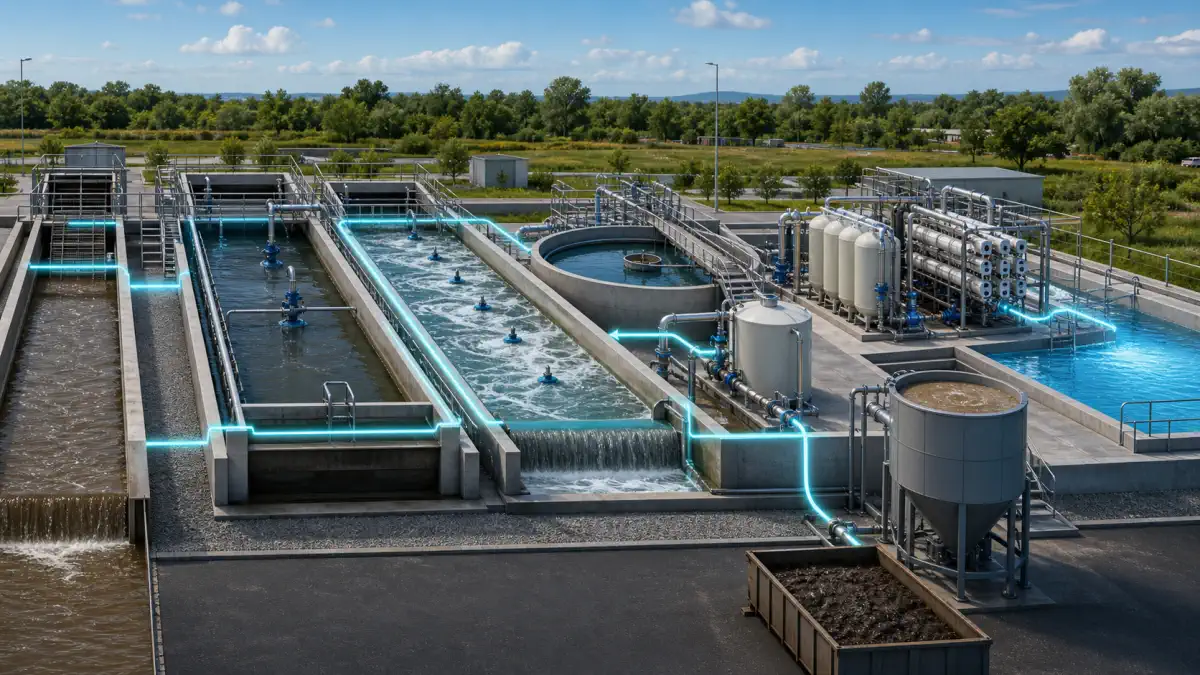
The selection of a process train is highly dependent on feed water characteristics, target discharge limits, and economic considerations. A robust system typically integrates pre-treatment, membrane separation, and concentrate management.
-
Pre-treatment: This is paramount for protecting downstream membranes.
- Coagulation/Flocculation/Sedimentation: Essential for removing larger suspended solids and reducing colloidal material. Chemical dosing (e.g., ferric chloride, anionic polymer) helps form larger flocs.
- Granular Media Filtration: Pressure filters with multi-media beds (sand, anthracite, garnet) can remove remaining suspended solids.
- Ultrafiltration (UF) / Microfiltration (MF): These membrane processes are increasingly preferred as pre-treatment for RO/NF. UF/MF reliably delivers a high-quality effluent with very low turbidity and low SDI₁₅ (typically < 3, often < 2), significantly extending the life and reducing fouling rates of downstream RO/NF membranes.
- pH Adjustment & Antiscalant Dosing: Critical before the RO/NF unit. pH adjustment helps manage scaling risks, while proprietary antiscalants inhibit the precipitation of scaling compounds like calcium carbonate, calcium sulfate, and especially calcium phosphate, extending membrane run times.
-
Primary Nutrient Removal (Upstream):
- Enhanced Biological Nutrient Removal (EBNR): If the main WWTP can be optimized, EBNR reduces the overall nutrient load to the membrane system.
- Chemical Phosphorus Precipitation: Pre-dosing with metal salts (iron or aluminum) can reduce the soluble phosphate load to the membranes and is often a robust upstream step.
-
Membrane Separation:
- Nanofiltration (NF): Often considered for its ability to reject divalent ions (like phosphates and sulfates) while allowing some monovalent salts to pass, resulting in lower operating pressures and less concentrate volume than RO. However, nitrate (a monovalent ion) rejection can be variable (50-90%), making it less suitable for very tight nitrate limits.
- Reverse Osmosis (RO): The technology of choice for achieving extremely low permeate concentrations of both nitrates and phosphates, as well as general TDS. RO membranes provide rejection rates typically >98% for both monovalent and divalent ions. This requires higher operating pressures but ensures compliance with the most stringent discharge classes. Multi-stage RO configurations (e.g., two-stage RO) can optimize recovery and minimize energy consumption.
-
Concentrate Treatment: As discussed in Section 3, options include chemical precipitation, struvite recovery, or ZLD via thermal evaporators/crystallizers.
5. Operating parameters
Effective operation of membrane systems for nutrient removal requires vigilant monitoring and control of key parameters to manage fouling, scaling, and ensure consistent permeate quality.
- SDI₁₅ (Silt Density Index): This is the most critical feed water quality parameter for RO/NF. A target SDI₁₅ of less than 3 is generally required for reliable RO operation; ideally, it should be below 2. Higher SDI₁₅ values directly correlate with increased particulate fouling and reduced membrane run times. Robust pre-treatment, often involving UF/MF, is essential to consistently achieve these low values.
- LSI (Langelier Saturation Index) / Scaling Posture: The LSI is primarily used for calcium carbonate scaling. However, for nutrient-rich streams, specific scaling indices for phosphate compounds (e.g., Calcium Phosphate Saturation Index - CaPSI, or calculation of solubility limits for struvite) are crucial. The design ensures that the concentrate stream, at its highest concentration, remains undersaturated or that scaling is effectively inhibited by antiscalants. Operating with a high LSI or CaPSI in the concentrate, even with antiscalants, increases risk. Frequent monitoring of key ions (Ca, Mg, PO₄, alkalinity) is required.
- Flux (L/(m²·h) / LMH): This is the permeate flow rate per unit of membrane area. For wastewater applications, design flux rates are typically conservative to mitigate fouling.
- UF/MF pre-treatment: Often operates in the range of 40-80 LMH, depending on membrane type and feed quality.
- RO/NF: Design flux for nutrient-laden effluents typically ranges from 10-25 LMH. Operating at lower fluxes significantly extends membrane life and reduces cleaning frequency, especially in challenging feed waters.
- ΔP (Differential Pressure / Stage Pressure Drop): This refers to the pressure drop across a membrane element or an entire stage of RO/NF membranes. A gradual, steady increase in ΔP over time is normal. However, a sudden or accelerated increase (e.g., >10-15% over the baseline after chemical cleaning) indicates significant fouling within the membrane elements. Monitoring ΔP is a key indicator for determining when a Clean-In-Place (CIP) procedure is necessary. Regular CIP cycles are essential to restore membrane performance and maintain design flux.
6. Digital twin & instrumentation
A comprehensive array of instrumentation & sensors continuously streams operational data to a centralized backend:
- Flow meters: Accurately measure feed, permeate, concentrate, and various pre-treatment chemical dosing flows, crucial for mass balance calculations and recovery rate management.
- Pressure transmitters: Located at the inlet and outlet of each membrane stage, across pre-filters, and for permeate and concentrate lines, providing real-time ΔP monitoring for fouling detection.
- Conductivity meters: Monitor feed, permeate, and concentrate conductivity, serving as a primary indicator of membrane salt rejection performance and the overall effectiveness of the treatment.
- Temperature probes: Monitor feed water temperature, which affects membrane performance (flux is temperature-dependent) and scaling kinetics.
- pH sensors: Essential for controlling chemical dosing (e.g., antiscalant, caustic for scale inhibition) and monitoring feed water stability.
- Turbidity meters: Positioned on the effluent of pre-treatment filters (e.g., UF/MF permeate) to ensure membrane protection by verifying low SDI conditions.
- Online nutrient analyzers: For critical applications, online sensors for nitrate and phosphate in the feed, permeate, and concentrate streams provide immediate feedback on treatment efficiency and highlight any issues with nutrient rejection.
This continuous data flow populates a digital twin model, which is a virtual representation of the physical plant. This model provides:
- Real-time mass balance reconciliation: The digital twin continuously tracks the mass of water, dissolved solids, and specific nutrients across each unit operation. It identifies discrepancies, pinpoints sources of loss or unexpected accumulation, and ensures that the overall system is operating within expected material flow parameters.
- Fouling and scaling risk forecasting: By analyzing trends in ΔP, flux, feed quality (e.g., SDI₁₅), and chemical dosing, the model predicts the onset and severity of fouling and scaling. It forecasts remaining run time before a Clean-In-Place (CIP) is required and optimizes antiscalant dosing based on real-time scaling indices (LSI, CaPSI) for the concentrate.
- Performance optimization: The model suggests adjustments to operating parameters (e.g., recovery rate, cleaning frequency, chemical dosages) to optimize permeate quality, minimize energy consumption, and extend membrane life, while always maintaining compliance.
- Operator decision support: The digital twin translates complex data into actionable insights, providing operators with alerts, diagnostic tools, and scenario planning capabilities (e.g., "What if the feed phosphate concentration doubles?"). This shifts operations from reactive troubleshooting to proactive management.
8. Common engineering mistakes & pilot KPIs
Successfully implementing membrane-based nutrient reduction requires careful planning and validation. Common engineering mistakes include:
- Underestimating feed variability: Wastewater characteristics fluctuate significantly. Designing for average conditions without accounting for peak flows or concentrations, or changes in organic/inorganic loading, can lead to system failure.
- Insufficient pre-treatment: This is the single biggest cause of membrane system failure. Skimping on pre-treatment (e.g., not achieving the required SDI₁₅) leads to rapid membrane fouling, excessive cleaning, and premature membrane replacement.
- Ignoring the concentrate stream: Failing to develop a robust, compliant, and cost-effective plan for concentrate disposition from the outset. The concentrate is not a disappearing act; it's a concentrated waste stream that requires a solution.
- Over-optimistic recovery rates: Pushing membrane recovery too high without proper consideration of scaling limits and antiscalant efficacy, leading to severe scaling and operational issues.
- Lack of pilot testing: Not performing adequate bench-scale or pilot studies to validate membrane selection, antiscalant efficacy, cleaning protocols, and achievable recovery for the specific feed water.
- Inadequate instrumentation: Operating without sufficient sensors to monitor key parameters, hindering effective process control and troubleshooting.
Key Performance Indicators (KPIs) for Pilot Studies:
- Membrane Flux Stability: Evaluate the duration membranes can operate at design flux before requiring cleaning.
- Recovery Rate: Determine the maximum achievable water recovery while maintaining permeate quality and acceptable fouling rates.
- Nutrient Rejection: Quantify the percentage removal of nitrate and phosphate across the NF/RO membranes.
- Permeate Quality: Confirm consistent compliance with target discharge limits (e.g., mg/L N, P, TSS, BOD).
- Concentrate Quality & Volume: Validate the feasibility and cost-effectiveness of the proposed concentrate disposal or treatment strategy.
- Specific Energy Consumption: Measure kWh per m³ of permeate produced.
- Chemical Consumption: Quantify usage of antiscalants, cleaning chemicals, and any pre-treatment coagulants.
9. FAQ
Q: Can Nanofiltration (NF) alone achieve the required nitrate and phosphate reduction for tight discharge limits? A: NF is generally effective for removing divalent ions like phosphate, but its rejection of monovalent ions such as nitrate can vary significantly (typically 50-90%) depending on the membrane type and feed water chemistry. For very stringent nitrate limits, Reverse Osmosis (RO) is almost always required to ensure consistent and high rejection rates. A hybrid approach, or NF for pre-concentration followed by RO, might also be considered.
Q: What if the concentrate stream from the membranes is too expensive to dispose of? A: This is a common challenge. Strategies include evaluating opportunities for resource recovery, such as struvite crystallization for phosphate and ammonia, which yields a valuable fertilizer. Recycling the concentrate to the plant's headworks can be considered if the upstream treatment process has sufficient capacity to handle the recirculated load without compromising overall effluent quality. For highly localized or small flows, pursuing Zero Liquid Discharge (ZLD) via evaporators/crystallizers may become economically viable if disposal costs are prohibitively high.
Q: How do we prevent biological fouling on the RO/NF membranes when treating wastewater effluent? A: Preventing biofouling is multifaceted. It begins with robust pre-treatment (e.g., UF/MF, biological activated carbon) to minimize biodegradable organic matter and suspended solids. Regular, well-designed Clean-In-Place (CIP) procedures are crucial. Intermittent biocide dosing (selected carefully for membrane compatibility and environmental impact) or non-oxidizing biocides can also be employed as part of a comprehensive anti-fouling strategy.
Q: Is it better to remove phosphorus chemically or biologically upstream of the membranes? A: A combination often yields the best results. Enhanced Biological Phosphorus Removal (EBPR) is a cost-effective method if the wastewater characteristics and plant design allow for it. However, to meet ultra-low discharge limits or to reduce the scaling potential on membranes, chemical phosphorus precipitation (e.g., using iron or aluminum salts) is typically employed either as a polishing step upstream of the membranes or specifically for the concentrated membrane reject stream.
Related equipment & product lines
These categories typically support the approach above—open any line to compare brands and models.
For a closer review, use the engineering inquiry form to share feed, capacity, target, and project stage. Submission does not constitute a completed design or performance commitment.