Solutions · Application Scenarios
RO pretreatment optimization: MMF, UF, and chemistry acting as one system
Unified SDI/TOC/metal control strategy ahead of the membrane block. Stable ΔP and flux maintenance with fewer emergency membrane replacements.
Use this guide within its scope
This page supports technical research and option comparison and is marked 2026. Illustrative values are not a quotation, completed process design, certification conclusion, or performance guarantee. Check current regulations, feed data, tests, and OEM records.
Problem
RO fails early when pretreatment is bought as unrelated skids.
Technology
Unified SDI/TOC/metal control strategy ahead of the membrane block.
Results
Stable ΔP and flux maintenance with fewer emergency membrane replacements.
Engineering decision card
Use when
RO fails early when pretreatment is bought as unrelated skids.
Evaluate first
Unified SDI/TOC/metal control strategy ahead of the membrane block.
Inputs still required
Feed source and variability, capacity, target quality, operating hours, discharge or reuse boundary, available space, and utilities.
Comparison output
Stable ΔP and flux maintenance with fewer emergency membrane replacements. The final decision still needs feed data, mass balance, and any necessary testing.
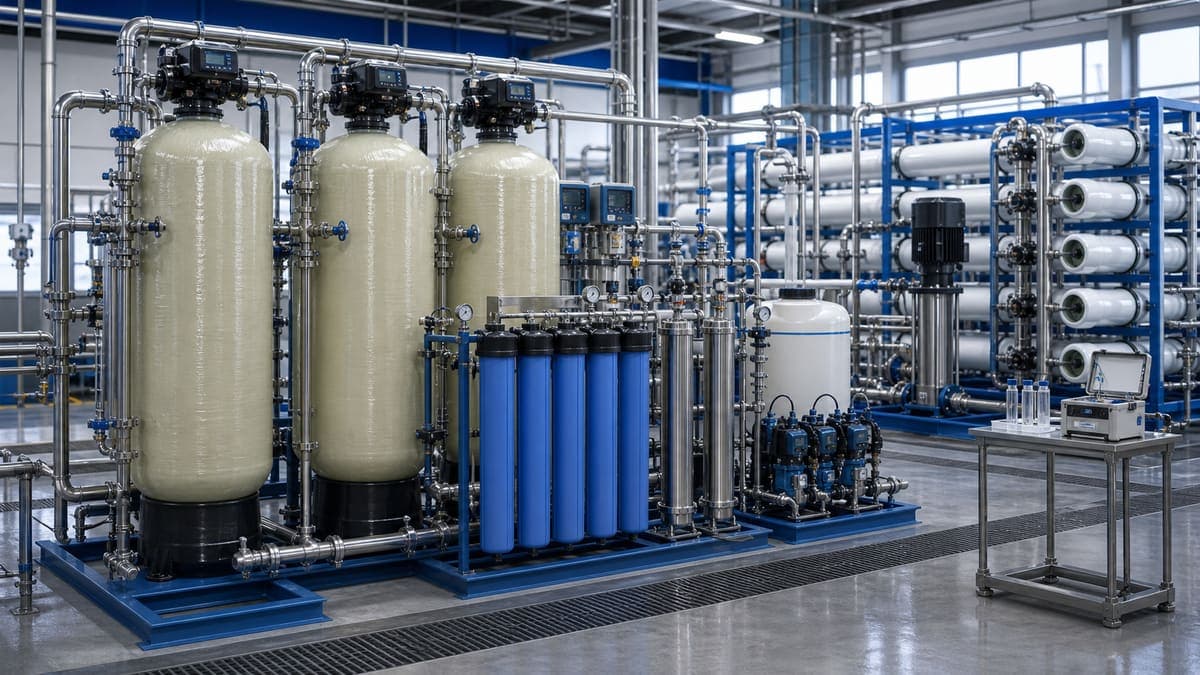
1. Process context & when this scenario is the right entry point
Reverse Osmosis (RO) pretreatment is not merely a preliminary step; it is the cornerstone of a reliable, efficient, and cost-effective membrane filtration system. This scenario focuses on optimizing the synergistic operation of mechanical filtration (Multi-Media Filters, MMF; Ultrafiltration, UF) and chemical conditioning. It is the right entry point when:
- An existing RO system frequently experiences premature fouling, high differential pressures, or shortened membrane lifespan.
- Feedwater quality is variable or challenging (e.g., surface water, municipal wastewater effluent, highly turbid industrial streams).
- The goal is to achieve higher RO recovery rates, reduce cleaning-in-place (CIP) frequency, or minimize operational expenditure (OPEX) related to membrane replacement and cleaning chemicals.
- Strict permeate quality requirements necessitate robust and consistent RO performance.
- Considering a new RO installation where predictable long-term performance is paramount.
Effective pretreatment is an integrated system designed to protect downstream RO membranes from fouling and scaling, thereby maximizing their operational efficiency and extending their service life.
2. Feed characteristics & key risks
Understanding the raw water feed is paramount. Key parameters include Total Suspended Solids (TSS), turbidity, Silt Density Index (SDI), Total Organic Carbon (TOC), Chemical Oxygen Demand (COD), hardness (calcium, magnesium), alkalinity, silica, iron, and manganese.
The primary risks for RO membranes originating from inadequate pretreatment are:
- Colloidal and Particulate Fouling: Suspended solids, colloids, and finely dispersed particles (often measured by SDI₁₅) can accumulate on the membrane surface, increasing feed channel differential pressure and reducing permeate flux.
- Organic Fouling: Natural Organic Matter (NOM) and synthetic organics (TOC/COD) can adsorb onto membranes, leading to flux decline and increased cleaning frequency.
- Scaling: Precipitation of sparingly soluble salts such as calcium carbonate (monitored by Langelier Saturation Index, LSI, or Stiff & Davis Index), calcium sulfate, silica, and barium/strontium sulfate can occur if saturation limits are exceeded at the membrane surface.
- Biological Fouling: Microorganisms can form biofilms on membranes, leading to flux decline and potential membrane damage.
- Oxidative Damage: Residual oxidants (e.g., chlorine) can irreversibly damage polyamide RO membranes.
These risks translate directly into increased OPEX (chemical consumption, energy for higher pressures, membrane replacement) and reduced system availability.
3. Concentrate / reject routing
A fundamental principle in water treatment is mass balance; matter does not simply disappear. In the context of pretreatment, the reject streams primarily originate from the backwash and flush cycles of the filtration units and the purge of spent chemical solutions.
- Multi-Media Filters (MMF) Backwash: This stream, typically occurring every 24–72 hours, contains concentrated suspended solids, accumulated organic matter, and potentially coagulant residuals. It is usually routed to the plant's wastewater treatment headworks (e.g., primary clarifier), a dedicated settling pond, or discharged to drain, subject to local regulatory limits on TSS and chemical content.
- Ultrafiltration (UF) Backwash/Flush: UF systems perform periodic backwashes and Chemical Enhanced Backwashes (CEB) to remove accumulated foulants. These streams are rich in suspended solids, colloids, and concentrated organics, often carrying the chemicals used in CEB (e.g., caustic, acid, hypochlorite). Like MMF backwash, they are typically directed to the wastewater treatment plant or a dedicated handling system.
- Cartridge Filter Disposal: Spent cartridge filters, which capture remaining fine particulates, are disposed of as solid waste, requiring proper classification and handling based on absorbed contaminants.
It is crucial to note that the RO system, which this pretreatment system protects, will generate its own concentrate stream. The effectiveness of pretreatment directly impacts the volume and quality of this RO concentrate, potentially enabling higher RO recovery and thus reducing the overall concentrate volume to be managed downstream (e.g., by further concentration, evaporation, crystallizer feed, haul-off, or deep well injection). The pretreatment reject streams, however, must be explicitly managed to avoid simply shifting the pollution burden.
4. Reference process train options
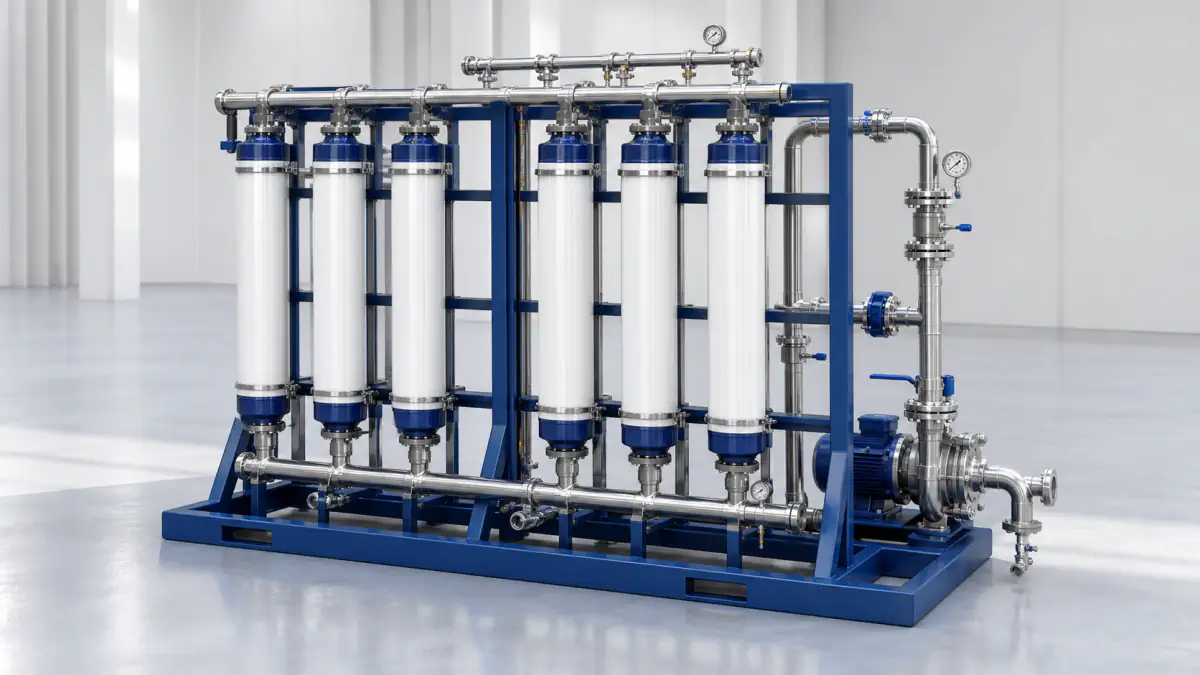
The selection of a pretreatment train is highly dependent on the raw water quality and target RO permeate specifications.
- Basic Pretreatment (Low SDI Feed): Often involves granular media filtration (e.g., MMF or green sand for iron/manganese removal) followed by cartridge filtration (typically 5-10 micron nominal) and chemical dosing (antiscalant, dechlorination, pH adjustment).
- Robust Pretreatment (Moderate to High SDI/TOC Feed): Incorporates Ultrafiltration (UF) or Microfiltration (MF) as the primary physical barrier, often preceded by coagulation/flocculation. This is followed by cartridge filtration (for guard duty) and the full chemical dosing suite. UF membranes (0.01-0.1 micron pore size) provide a superior and more consistent barrier against particulates, colloids, and some macromolecular organics compared to MMF, reliably achieving SDI₁₅ values well below 3.
- Advanced Pretreatment (Very Challenging Feeds): May include clarification/dissolved air flotation (DAF) for high TSS feeds, followed by MMF or UF, then cartridge filtration and chemical conditioning. Adsorption (e.g., GAC) may be added for specific organic removal.
Chemical conditioning involves:
- Coagulation/Flocculation: For aggregating suspended solids and colloids prior to filtration.
- Dechlorination: Sodium bisulfite or activated carbon to remove oxidants.
- Antiscalant Dosing: To inhibit the precipitation of scaling salts, crucial for achieving high RO recovery.
- pH Adjustment: For optimizing coagulant performance, controlling LSI, or preventing silica polymerization.
- Biocides: For controlling biological growth in feed lines and on membranes.
5. Operating parameters
Precise control and monitoring of key operating parameters ensure optimal pretreatment and RO performance.
- SDI₁₅ (Silt Density Index): The paramount indicator for colloidal fouling potential. For robust RO operation, the target SDI₁₅ value in the RO feed should consistently be below 3.0, and ideally below 2.0. For NF applications, a target of <5.0 is generally acceptable. Pretreatment systems like UF can reliably achieve SDI₁₅ values in the range of 0.5 to 1.5, significantly extending RO membrane life.
- LSI (Langelier Saturation Index) / Scaling Posture: The LSI, or other saturation indices for silica and sulfates, must be carefully managed. For calcium carbonate, a final RO concentrate LSI typically should not exceed +1.0 without specialized antiscalants or reduced recovery. Silica saturation should remain below 100-120 ppm (as SiO₂) in the concentrate stream to prevent polymerization and scaling, while sulfates must be carefully monitored. Antiscalant type and dosage are critical and are often optimized during pilot testing.
- Flux (L/(m²·h) / LMH): Design flux rates are crucial. For UF membranes, typical design fluxes range from 40 to 100 LMH, inversely related to feed water quality and directly influencing cleaning frequency. For RO membranes (though downstream), design fluxes typically range from 10-25 LMH for brackish water and 5-15 LMH for seawater/high TDS feeds. Lower design fluxes increase membrane area but reduce fouling propensity and operating pressure.
- DP (Differential Pressure): Monitoring differential pressure across filtration stages is critical for determining cleaning cycles and media/cartridge replacement.
- MMF: ΔP across the filter bed typically triggers backwash when it reaches 0.5-0.7 bar.
- UF Modules: Transmembrane pressure (TMP) increase indicates fouling, triggering backwash or CEB cycles. A typical limit for clean water flux restoration is a 20-30% increase in TMP.
- Cartridge Filters: ΔP across the housing reaching 0.7-1.5 bar (or a scheduled interval) signals the need for replacement to prevent membrane starvation or damage. Consistent monitoring of ΔP trends allows for predictive maintenance and avoids sudden process upsets.
6. Digital twin & instrumentation
Instrumentation & Sensors:
- Online Analyzers: Continuous monitoring of critical parameters:
- Turbidity: Raw water and post-filtration (MMF/UF permeate).
- SDI: Post-pretreatment, directly feeding the RO.
- pH & ORP: Raw water, post-coagulation, post-dechlorination.
- Conductivity/TDS: Raw water, RO feed.
- Flow Meters: Accurate measurement of raw water intake, backwash rates, permeate flows, and chemical dosing rates.
- Pressure Transducers: High-resolution measurement of feed pressure, permeate pressure, concentrate pressure, and crucially, differential pressures across all filtration stages (MMF, UF, cartridge filters).
- Temperature Sensors: Monitoring water temperature, which impacts viscosity, membrane performance, and scaling kinetics.
These sensors stream real-time data into the this approach backend.
Models / Digital Twin Use Cases:
- Mass Balance Reconciliation: The digital twin continuously reconciles flow rates and measured parameters across the MMF/UF and chemical dosing units to ensure material balance and identify discrepancies or sensor drifts.
- Fouling & Scaling Risk Forecasting: By analyzing SDI trends, turbidity spikes, and ΔP increases, the digital twin forecasts the likelihood and severity of colloidal/particulate fouling. Based on real-time feed chemistry (hardness, alkalinity, silica, etc.) and temperature, it calculates LSI and other saturation indices, predicting scaling risk within the RO concentrate stream.
- Predictive Maintenance: The system can predict optimal backwash frequencies for MMF/UF, signal impending cartridge filter change-outs based on ΔP trends, and recommend CIP schedules for UF membranes before irreversible fouling occurs.
- Chemical Dosing Optimization: Through correlation of feed quality with pretreatment performance (e.g., post-coagulation turbidity, SDI), the digital twin can suggest adjustments to coagulant, antiscalant, and biocide dosages, minimizing chemical consumption while maintaining performance.
- Energy Consumption Analysis: Monitoring pump pressures and flow rates allows for real-time calculation and optimization of specific energy consumption, identifying opportunities for efficiency improvements.
- Operator Decision Support: The digital twin provides actionable alerts and recommendations, enabling operators to make proactive adjustments, reducing manual intervention, and preventing costly shutdowns or membrane damage.
7. Pilot-Scale vs Industrial RO
For this specific application of RO pretreatment optimization, both modular RO system portfolios offer distinct advantages.
pilot-scale RO: This compact, often skid-mounted or mobile unit is ideal for pilot studies, temporary water demands, or validating specific pretreatment strategies. It can be deployed to characterize complex or variable feedwaters, compare MMF vs. UF performance, optimize chemical dosing (e.g., coagulant types, antiscalant dosages), and confirm the achievable SDI₁₅ for a downstream RO. Its quick deployment and smaller footprint make it perfect for demonstrating ROI on enhanced pretreatment before committing to a full-scale plant.
8. Common engineering mistakes & pilot KPIs
Common Engineering Mistakes:
- Undersizing Pretreatment: Failing to account for peak loads or worst-case feed quality variations.
- Ignoring Seasonal Variations: Designing for average conditions, leading to performance issues during seasonal turbidity spikes, temperature changes, or organic load fluctuations.
- Inadequate Chemical Dosing Control: Fixed-rate dosing irrespective of feed quality, leading to over-dosing (waste) or under-dosing (fouling).
- Poor Monitoring & Data Interpretation: Relying solely on manual grab samples or neglecting online data trends, missing early indicators of fouling/scaling.
- Neglecting Concentrate Disposal: Not having a comprehensive and cost-effective plan for managing MMF/UF backwash and ultimately RO concentrate, leading to permitting or operational bottlenecks.
- Insufficient Pilot Testing: Skipping pilot studies for complex waters, leading to costly redesigns or operational headaches at full scale.
Key Performance Indicators (KPIs) for Pilot Studies:
- SDI₁₅ Reduction: Percentage reduction from raw water to RO feed, and consistency of final SDI₁₅.
- UF/MMF Permeate Turbidity: Consistent target of <0.1 NTU for UF, <1.0 NTU for MMF.
- Specific Flux Decline Rate: For UF, rate of flux decline between cleans, and recovery of specific flux after backwash/CEB.
- Cleaning Frequency & Chemical Consumption: Optimized backwash/CEB frequency and associated chemical usage per cubic meter of treated water.
- Chemical Dosage Optimization: Minimum effective dosages for coagulant and antiscalant to meet performance targets.
- Projected RO Recovery: The maximum sustainable RO recovery achievable with the optimized pretreatment.
- Overall Water Recovery: The percentage of raw water converted to RO feed after pretreatment's own internal water losses (backwash).
9. FAQ
Q: How often should I check SDI? A: For critical RO systems, continuous online SDI₁₅ monitoring is highly recommended. If online instrumentation is not feasible, daily measurements are the minimum, with increased frequency during periods of known raw water variability (e.g., storm events, seasonal changes).
Q: Can I skip UF and just use MMF for RO pretreatment? A: This depends entirely on the raw water quality and the desired RO performance. If the raw water consistently has very low turbidity (<5 NTU) and SDI₁₅ (<3) and limited organic content, a well-operated MMF can suffice. However, for higher turbidity, variable feeds, or when aiming for higher RO recovery and longer membrane life, UF provides a more reliable and robust barrier, consistently achieving lower SDI₁₅ values.
Q: What is the single biggest driver for RO membrane fouling? A: While scaling is critical, inadequate removal of colloidal and particulate matter (high SDI₁₅) or problematic organic compounds (high TOC) from the feed water often represents the biggest challenge leading to RO membrane fouling. These foulants create a cake layer that increases differential pressure, reduces flux, and exacerbates scaling by concentrating ions at the membrane surface.
Q: How does pH adjustment fit into pretreatment? A: pH adjustment serves several key roles: optimizing the performance of coagulants for improved flocculation, controlling the LSI to prevent calcium carbonate scaling, and influencing the solubility of other scaling species like silica. For example, lowering pH can prevent calcium carbonate scale, but might increase silica solubility. It's a critical balancing act in chemical conditioning.
Related equipment & product lines
These categories typically support the approach above—open any line to compare brands and models.
For a closer review, use the engineering inquiry form to share feed, capacity, target, and project stage. Submission does not constitute a completed design or performance commitment.