Solutions · Application Scenarios
Ultrapure water polishing: EDI and nuclear-grade resin finishing
Continuous EDI after RO with defined concentrate and electrode waste handling. Stable high-resistivity product with documented minor waste streams.
Use this guide within its scope
This page supports technical research and option comparison and is marked 2026. Illustrative values are not a quotation, completed process design, certification conclusion, or performance guarantee. Check current regulations, feed data, tests, and OEM records.
Problem
Polishing is where contract resistivity and TOC either pass—or fail in audits.
Technology
Continuous EDI after RO with defined concentrate and electrode waste handling.
Results
Stable high-resistivity product with documented minor waste streams.
Engineering decision card
Use when
Polishing is where contract resistivity and TOC either pass—or fail in audits.
Evaluate first
Continuous EDI after RO with defined concentrate and electrode waste handling.
Inputs still required
Feed source and variability, capacity, target quality, operating hours, discharge or reuse boundary, available space, and utilities.
Comparison output
Stable high-resistivity product with documented minor waste streams. The final decision still needs feed data, mass balance, and any necessary testing.
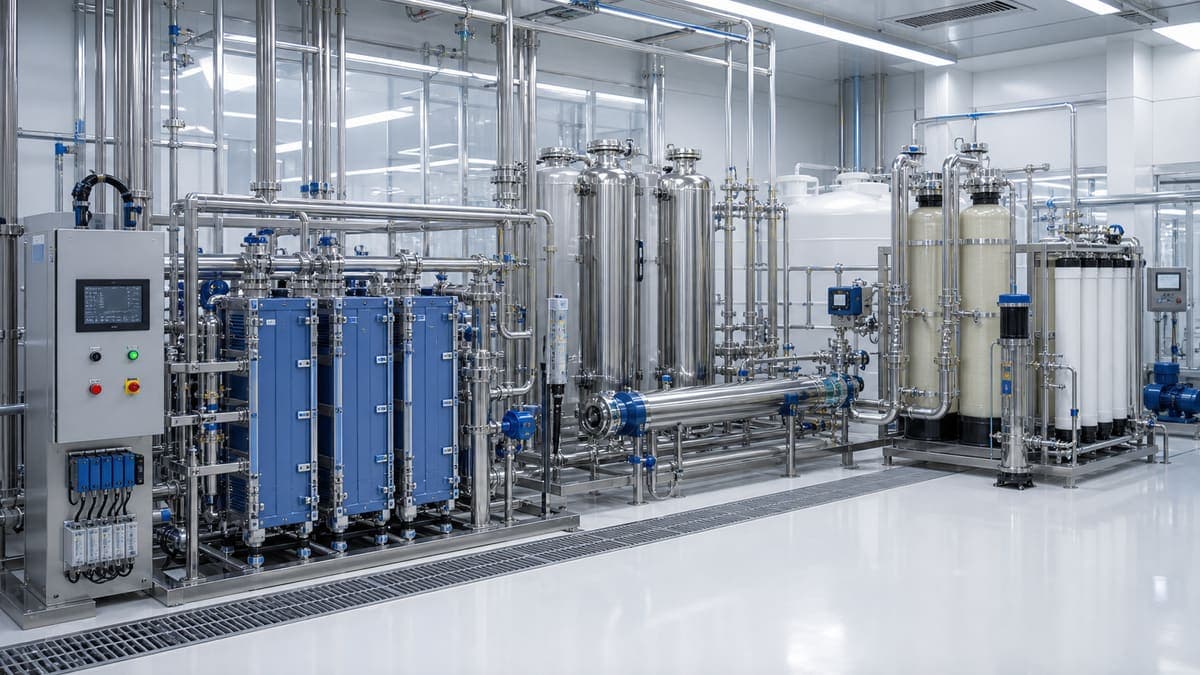
Process context & when this scenario is the right entry point
Ultrapure water (UPW) is a critical utility in industries requiring exceptionally low levels of dissolved ions, particles, organics, and microorganisms. Applications span semiconductor manufacturing, pharmaceutical production, power generation (boiler feed water), and specialized research laboratories. This scenario focuses on the final polishing stages of UPW production, specifically the integration of Electrodeionization (EDI) and subsequent nuclear-grade ion exchange (IX) resins to achieve multi-megohm-cm resistivity and ultra-low Total Organic Carbon (TOC).
This process sequence is the right entry point when primary purification, typically involving multi-stage Reverse Osmosis (RO) and often degasification, has already reduced the total dissolved solids (TDS) to a conductivity range of 1-50 µS/cm. EDI is favored over conventional mixed-bed ion exchange for its continuous operation, eliminating the need for periodic chemical regeneration and the associated handling and disposal of hazardous waste. The final nuclear-grade resin polish serves as a 'security filter' and ensures the absolute lowest ionic and particulate contamination, meeting stringent industry specifications (e.g., 18.2 MΩ·cm at 25°C, sub-ppb TOC, and minimal particle counts).
Feed characteristics & key risks
The feed to the EDI system is typically high-purity permeate from a well-maintained RO system, often after a decarbonation/degasification step. Key feed characteristics include:
- Conductivity/TDS: Typically 1-50 µS/cm, reflecting residual inorganic ions.
- Hardness: Extremely low, ideally <0.1 ppm as CaCO₃, to prevent scaling within the EDI module.
- Silica: Low, typically <0.5 ppm, to prevent silica polymerization and scaling on EDI membranes.
- Total Organic Carbon (TOC): Generally <100 ppb from the RO permeate. While EDI can remove some ionized organics, non-ionized TOC can pass through and potentially foul membranes or lead to downstream issues.
- Particulates/Colloids: Very low, with an SDI₁₅ typically <1.0, and ideally <0.5.
Key risks in EDI operation relate primarily to scaling and fouling:
- Scaling: Even trace levels of hardness (Ca, Mg) and silica can precipitate within the EDI concentrate compartments or on the anion/cation exchange membranes, especially under the influence of the electric field and pH shifts. This reduces ion removal efficiency and increases differential pressure.
- Fouling: Residual TOC, particularly humic acids or other complex organic molecules, can foul the ion exchange resins within the EDI modules, leading to reduced performance and increased electrical resistance. Colloidal silica or fine particulates, if not adequately removed by upstream filtration, can also contribute to fouling.
- Gas Entrapment: Dissolved CO₂ (if not removed by degasification) can be removed by EDI but consumes current, reducing efficiency. Dissolved oxygen can contribute to electrode corrosion.
Concentrate / reject routing
A fundamental principle of water treatment is mass balance. For EDI, there are two primary streams requiring disposition:
-
EDI Concentrate Stream: This stream, typically 5-10% of the feed flow, contains the concentrated ions removed from the RO permeate. It is often enriched in hardness, alkalinity, and silica compared to the EDI feed.
- Routing Option 1 (Most Common): Recycle back to the primary RO feed tank. This maximizes water recovery for the overall plant but imposes an additional load on the upstream RO system, increasing its feed TDS and potentially reducing its recovery or requiring increased cleaning frequency.
- Routing Option 2: Direct discharge to drain. This is less common due to water and chemical loss but may be considered in situations with abundant raw water or when the concentrate quality is unsuitable for recycle.
- Routing Option 3 (Advanced): Further processing through a dedicated secondary RO or a small ion exchange unit if ZLD (Zero Liquid Discharge) or stricter environmental regulations apply.
-
Electrode Compartment Purge/Bleed: A very small flow (typically <1% of the feed) is continuously purged from the anode and cathode compartments to prevent concentration of species and maintain electrochemical stability.
- Routing Option 1: Combine with the EDI concentrate stream for shared disposition.
- Routing Option 2: Direct discharge to drain, given its minimal volume.
For the final nuclear-grade resin beds, these are typically non-regenerable (or sent off-site for regeneration) "polishing" cartridges designed for long service life. When exhausted, the cartridges are replaced, and the spent resin is either disposed of as solid waste or, in specific scenarios (e.g., power industry), sent for specialized off-site regeneration. There is no continuous concentrate stream from this stage.
Reference process train options
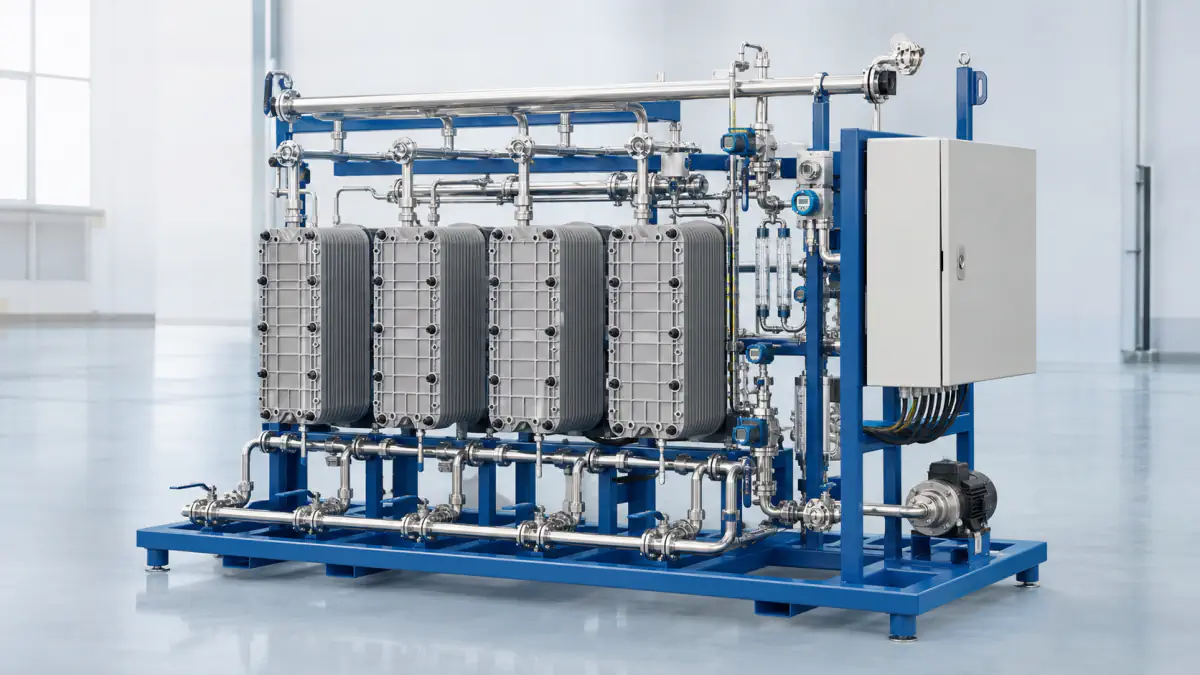
A robust UPW system featuring EDI and nuclear-grade resin finishing typically follows this sequence:
- Raw Water Pretreatment: Filtration (e.g., multimedia filters, ultrafiltration) to reduce turbidity and suspended solids, followed by activated carbon for chlorine and TOC removal.
- Primary Reverse Osmosis (RO): Often a two-pass system or a single-pass with high rejection membranes, designed to reduce TDS by >98%.
- Degasification: Post-RO, a forced-draft degasifier or membrane degasifier is frequently employed to remove dissolved CO₂ and O₂, significantly improving EDI efficiency and final resistivity.
- Secondary RO (Optional): In some ultra-high purity applications, a second pass RO system further reduces the ionic load and prepares the water for EDI.
- EDI (Electrodeionization): The core continuous deionization step. EDI modules consist of ion exchange resins and membranes stacked between electrodes. An applied DC electrical field continuously removes ions from the diluent (product) stream into the concentrate stream. EDI modules often include internal concentrate recirculation loops to manage ion concentration within the concentrate compartments, enhancing efficiency.
- UV Sterilization: Post-EDI, a UV sterilizer (254 nm wavelength) is used to inactivate microorganisms, preventing biofouling in downstream components and ensuring hygienic product water.
- Nuclear-Grade Mixed Bed Ion Exchange (MBIX): This is the final "polishing" step. These beds contain a carefully selected blend of cation and anion exchange resins, often with specific bead sizes and very low leachable TOC, ensuring the absolute highest resistivity and lowest possible ionic contamination. They act as a guard bed against any residual ionic slip from the EDI and capture any trace ionic contaminants.
- Ultraviolet Oxidation (UV-Oxidation): For critical applications requiring sub-ppb TOC, a UV reactor (often 185 nm wavelength) is used after the MBIX to oxidize any residual non-ionic organic compounds into CO₂, which can then be removed by a final degasifier or a small polishing mixed bed.
- Point-of-Use Filtration: Final sub-micron or ultrafiltration membrane filters just before the point of use to remove any particulates generated downstream or from the distribution loop.
Operating parameters
Precise control and monitoring of operating parameters are crucial for consistent UPW quality and system longevity.
- SDI₁₅: The Silt Density Index of the EDI feed (RO permeate) must be rigorously maintained at <1, ideally <0.5. Higher SDI indicates colloidal or particulate fouling potential, which can rapidly diminish EDI performance and increase ΔP.
- LSI (Langelier Saturation Index): While LSI is primarily used for scaling prediction in higher TDS waters, the principle applies. For EDI, the focus is on maintaining extremely low concentrations of hardness ions (Ca, Mg) and silica. Any residual hardness or silica can lead to scaling in the concentrate compartments, especially as the pH shifts under the electric field. Pretreatment (RO, softening if necessary) must ensure hardness <0.1 ppm and silica <0.5 ppm to prevent scaling issues.
- Flux (LMH): EDI modules are designed for specific flux rates, typically 10-25 L/(m²·h). Operating below the design flux can reduce ion transport efficiency, while over-fluxing can lead to incomplete deionization and reduced permeate quality. The flux is maintained by flow control on the EDI feed pump.
- DP (Differential Pressure / Stage Pressure Drop): The pressure drop across an EDI module (ΔP) is a critical indicator of fouling or scaling. A clean module typically exhibits a ΔP of 0.5-1.5 bar. A consistent increase in ΔP (e.g., >2-3 bar above baseline) signals fouling or scaling within the resin beds or on the membranes, necessitating cleaning. Monitoring individual module ΔP allows for targeted maintenance.
- Resistivity: Feed resistivity to EDI typically ranges from 1 MΩ·cm down to 20 kΩ·cm. Permeate resistivity from EDI should consistently be >15 MΩ·cm, with the final nuclear-grade polish achieving >18 MΩ·cm.
- TOC: EDI feed TOC should be <100 ppb. Final UPW targets are often <5 ppb, frequently <1 ppb after UV-oxidation.
Digital twin & instrumentation
- Flow Meters: Electromagnetic or ultrasonic flow meters on EDI feed, diluent (product), concentrate, and electrode compartment purge lines. Accuracy is crucial for mass balance calculations.
- Pressure Transmitters: Inlet and outlet pressures for each EDI module, as well as differential pressure transmitters across each module and the final polishing beds.
- Conductivity/Resistivity Probes: High-precision sensors at key points: RO permeate (EDI feed), EDI permeate, EDI concentrate, electrode purge lines, and post-MBIX. Temperature compensation is essential.
- Temperature Sensors: On all major process streams to provide context for conductivity readings and to monitor system stability.
- TOC Analyzers: Online TOC analyzers are indispensable on the EDI feed and final UPW permeate to monitor organic contamination.
- Silica Analyzers (Optional): For critical applications, online silica analyzers on RO permeate and EDI permeate can provide early warning of silica scaling potential.
Pilot-Scale vs Industrial RO
For piloting and small-scale UPW requirements, the pilot-scale RO line offers compact, skid-mounted EDI systems, often coupled with small-scale RO and polishing beds. These units are ideal for process validation, research laboratories, temporary UPW needs, or decentralized point-of-use polishing where flexibility and a small footprint are paramount. They provide robust data collection for scale-up studies.
Common engineering mistakes & pilot KPIs
Common Engineering Mistakes:
- Inadequate Pretreatment: Failing to achieve stringent RO permeate quality (e.g., elevated hardness, silica, or TOC) directly compromises EDI performance, leading to premature scaling, fouling, and reduced life.
- Neglecting Degasification: High CO₂ in the EDI feed significantly increases the current demand, reducing efficiency and potentially lowering permeate resistivity due to carbonic acid.
- Over-fluxing/Under-currenting EDI: Operating EDI modules outside their specified design parameters can lead to incomplete deionization, poor water quality, or accelerated scaling.
- Ignoring Concentrate Management: Assuming the EDI concentrate is a benign waste stream without considering its volume, quality, and environmental impact (or potential for reuse) is a critical oversight.
- Lack of Redundancy: For critical UPW applications, a single-train EDI system presents an unacceptable risk of production stoppage during maintenance or unexpected upsets.
- Poor Instrumentation & Monitoring: Insufficient sensor coverage or inadequate data interpretation makes it impossible to proactively manage system performance, leading to reactive troubleshooting.
Pilot KPIs (Key Performance Indicators):
- Product Water Resistivity: Consistent achievement of target >17 MΩ·cm post-EDI, >18 MΩ·cm post-MBIX.
- Ionic Removal Efficiency: Specific removal rates for target ions (e.g., Na, Cl, Ca, Mg, SiO₂), typically >99.5% for EDI.
- TOC Reduction: Percentage reduction from EDI feed to final product, targeting sub-ppb levels.
- EDI Module ΔP Stability: Minimal increase in pressure drop over extended periods, indicating effective fouling/scaling control.
- Current Efficiency: Ratio of theoretical current required for ion removal to actual current consumed, reflecting energy efficiency.
- System Recovery: Overall water recovery percentage for the entire UPW train, including concentrate recycling strategies.
- Membrane/Resin Life: Projected operating hours/volume before cleaning or replacement is required, assessed from performance trends.
FAQ
Q1: Why choose EDI over conventional mixed-bed ion exchange for UPW production? A1: EDI offers continuous operation, eliminating the need for periodic chemical regeneration of ion exchange resins. This avoids the handling, storage, and disposal of hazardous regeneration chemicals, simplifies operation, reduces labor, and minimizes effluent waste streams associated with regeneration.
Q2: What are the most critical feed parameters for stable EDI operation? A2: The most critical feed parameters are extremely low hardness (<0.1 ppm as CaCO₃), low silica (<0.5 ppm), and a stable, low conductivity (1-50 µS/cm) from the upstream RO system. High levels of these can lead to scaling and fouling, while unstable feed quality can cause performance fluctuations.
Q3: How is dissolved CO₂ handled if it passes through the RO system into the EDI feed? A3: While EDI can remove dissolved CO₂ (which forms carbonic acid in water), it is energy-intensive. Therefore, a degasifier (e.g., forced-draft or membrane degasifier) is typically installed between the primary RO and EDI to reduce CO₂ concentration, improving EDI efficiency and final permeate resistivity.
Q4: What defines "nuclear-grade resin" and why is it used for UPW polishing? A4: Nuclear-grade resin refers to specially processed ion exchange resins with extremely high purity, very low levels of leachable TOC, and specific bead size distributions. They are designed for demanding applications where even trace impurities are unacceptable. They are used in UPW polishing as a final guard filter to achieve the absolute lowest ionic and organic contamination, ensuring the multi-megohm-cm resistivity and sub-ppb TOC required for critical industries.
Related equipment & product lines
These categories typically support the approach above—open any line to compare brands and models.
- Electrodeionization (EDI)EDI modules and systems for ultrapure water production.View category →
- RO MembranesReverse osmosis membrane elements for municipal and industrial desalination.View category →
- UV DisinfectionUV systems and modules for pathogen inactivation and final disinfection barriers.View category →
For a closer review, use the engineering inquiry form to share feed, capacity, target, and project stage. Submission does not constitute a completed design or performance commitment.